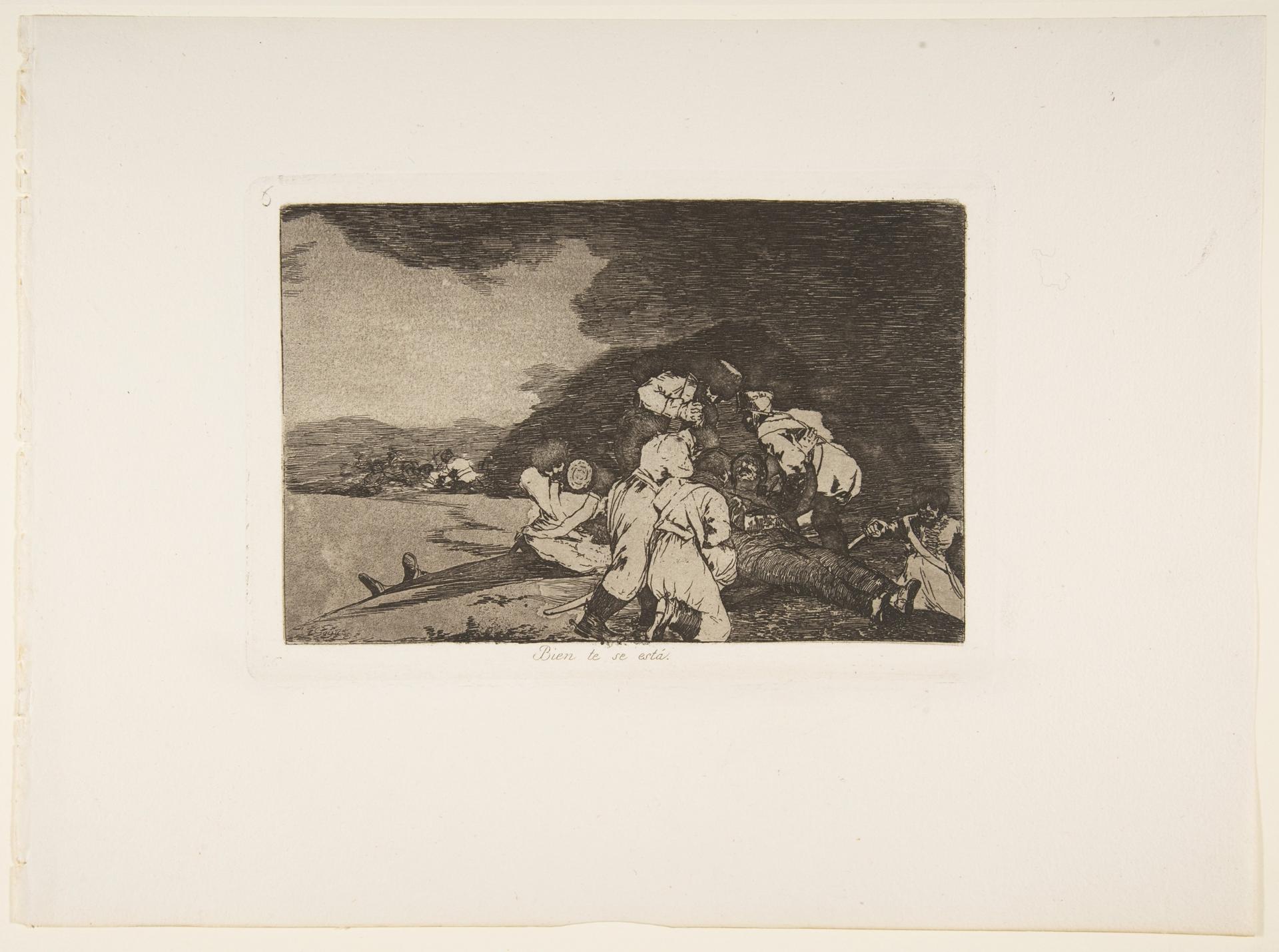
Plate 6 from 'The Disasters of War' (Los Desastres de la Guerra): 'It serves you right' (Bien te se está)
Original title: Plate 6 from "The Disasters of War" (Los Desastres de la Guerra): 'It serves you right' (Bien te se está)
kurzbeschreibung
A wounded or dying soldier lies on the ground while a small crowd gathers around him in a bleak, somber landscape. This is plate 6 from Goya's 'The Disasters of War,' etched in 1810 but not published until 1863, after the artist's death.
Description
Several figures stand over the fallen warrior; some appear to support or tend to him. Behind them, a ridge of hills rises under a dark, cloud-filled sky. The clothing of those present looks traditional, pointing to an earlier era. The arrangement is asymmetrical, drawing the eye to the soldier at the center, while muted, dark tones and diffuse light sustain the mournful mood.
Context
Between 1810 and 1820, Goya worked on the etching series 'The Disasters of War,' a response to the Napoleonic Wars and the Spanish War of Independence. The series was only published in 1863, long after the artist's death, by the Real Academia de Bellas Artes de San Fernando in Madrid. Plate 6 bears the ironic title 'This is what you deserve,' which invites a moralizing reading of the violence shown. Goya had witnessed the horrors of war in Spain himself, which explains the unflinching nature of his account.
Impact
The dark tones and diffuse light evoke an oppressive, melancholy atmosphere that quickly draws the viewer into the event. Because the layout is asymmetrical and focuses on the suffering soldier, the scene gains emotional force; the horrors of war become immediately tangible.
Technique
The plate was executed as an etching with lavis and burin, allowing for fine tonal gradations and strong contrasts of light and dark. The lavis, an ink wash, was applied to the etched plate to achieve soft, painterly effects. The printing plate measures 14.1 × 21 cm, the sheet 25.2 × 34 cm.
AI-generated description text
Source: Metropolitan Museum of Art · Public Domain (CC0 1.0)