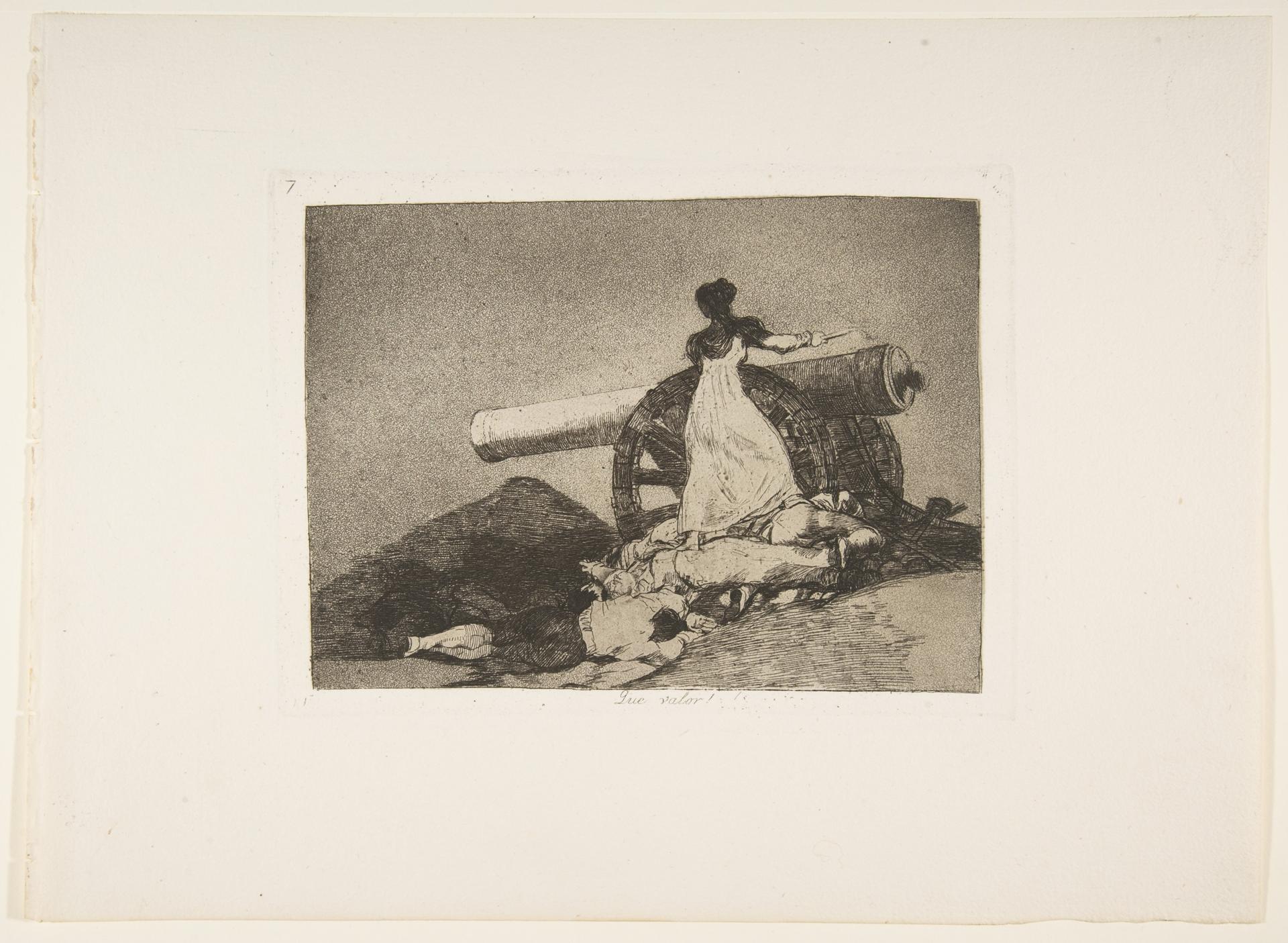
Plate 7 from "The Disasters of War" (Los Desastres de la Guerra): 'What courage!' (Que valor!)
Original title: Plate 7 from "The Disasters of War" (Los Desastres de la Guerra): 'What courage!' (Que valor!)
kurzbeschreibung
A woman sits on a cannon barrel, holding a long stick; dead or wounded men lie around her. This image belongs to Francisco de Goya's etching series 'The Disasters of War,' created in 1810 and published in 1863. The technique combines etching, aquatint, drypoint, and burin.
Description
In a simple white dress, a woman enthrones herself on the barrel of a cannon that juts into the picture space, and she grasps a long stick. Before her, several motionless or injured bodies lie on the ground, their limbs twisted. Dark, rocky areas in the background suggest a war-scarred landscape. Harsh shading and detailed linework create a somber, expressive mood. The layout is asymmetrical and directs the gaze to the woman and the gun, while gray tones intensify the desolate atmosphere.
Context
Goya made the series 'The Disasters of War' between 1810 and 1820 in response to the Napoleonic occupation of Spain and the Spanish War of Independence. The prints were only published in 1863, 35 years after Goya's death, by the Royal Academy of San Fernando. The sheet 'Que valor!' emphasizes the resistance of the civilian population, especially the role of women in the fight against French troops. Goya worked on the etchings at a time when other critical works such as 'The Misfortunes of War' were also being created.
Impact
A single woman as a heroic figure amid corpses triggers an oppressive mixture of admiration and horror. The dark, high-contrast etching heightens the emotional impact and makes the event appear as an immediate testimony. The viewer is confronted with the cruelty of war without any explicit moral judgment.
Technique
Etching with aquatint, drypoint, and burin produces fine lines and deep shadows. Aquatint allows soft tonal gradations, while drypoint and burin ensure precise, strong contours. The paper measures 9 15/16 x 13 1/2 inches, the plate 6 x 8 3/16 inches.
AI-generated description text
Source: Metropolitan Museum of Art · Public Domain (CC0 1.0)