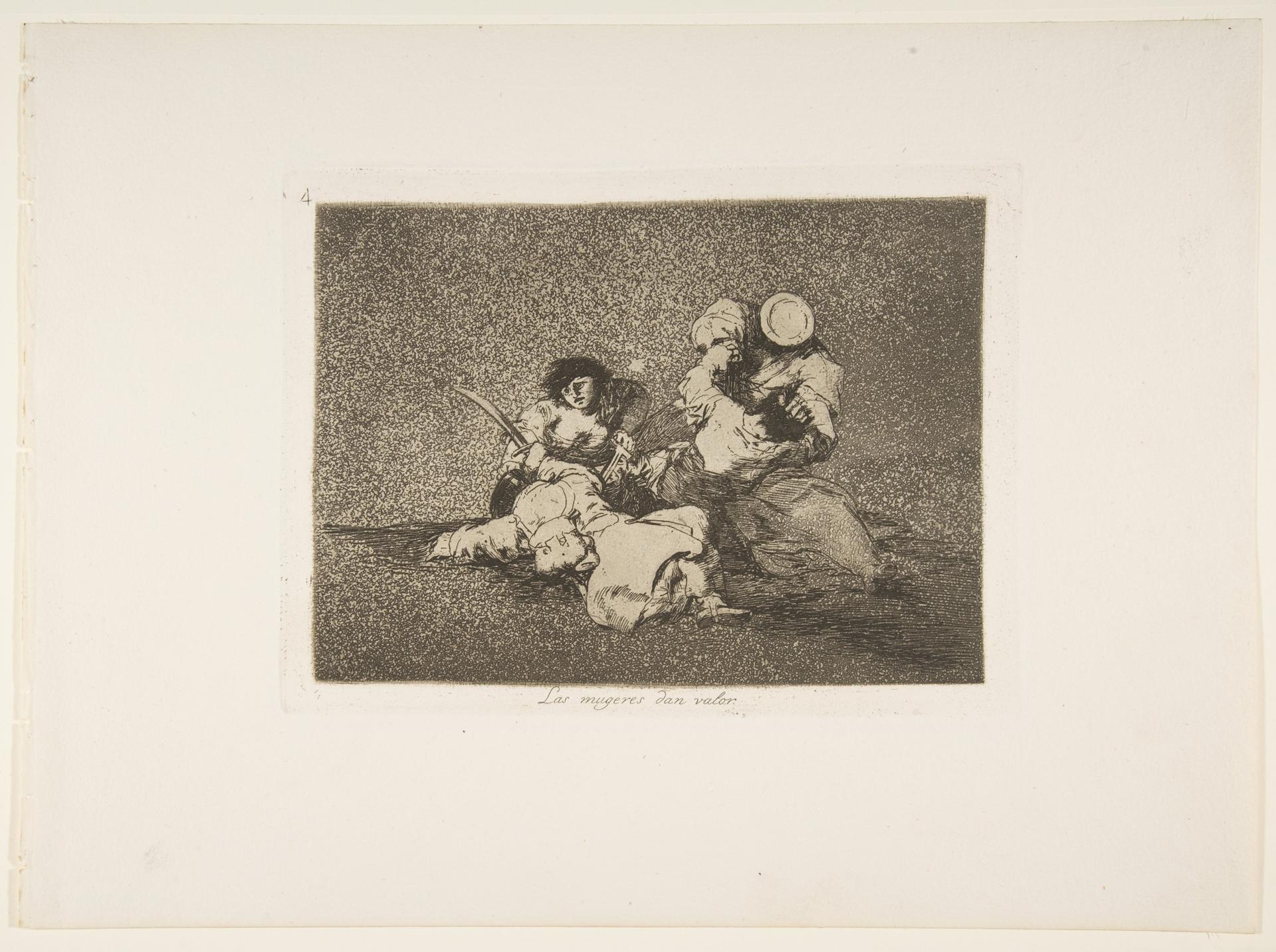
Plate 4 from "The Disasters of War" (Los Desastres de la Guerra): 'The women give courage' (Las mugeres dan valor)
Original title: Plate 4 from "The Disasters of War" (Los Desastres de la Guerra): 'The women give courage' (Las mugeres dan valor)
kurzbeschreibung
Francisco de Goya y Lucientes made this fourth sheet of his etching series 'The Disasters of War' (Los Desastres de la Guerra) in 1810, though the series was not published until 1863, long after his death. Executed in etching, aquatint, lavis, drypoint and burnishing, the image brings together a group of women in a charged scene.
Description
Three women confront the viewer in a tense situation. Two of them crouch on the ground, one clutching a sword, the other holding a weapon. A third stands upright opposite them, her gaze turned toward the seated pair. A dark, barely articulated background makes their bodies stand out. The layout avoids symmetry and thereby heightens the agitation of the event.
Context
Between 1810 and 1820, Goya created his series as a response to the Napoleonic Wars in Spain and the subsequent restoration. During the artist's lifetime, the prints remained unpublished, likely for political reasons. Only in 1863 did they appear in Madrid as 'Los Desastres de la Guerra'. The fourth sheet focuses on the role of women in resistance to the French occupation.
Impact
The figures' concentrated posture and the dark, barren space generate an immediate tension. Asymmetry and restless linework give the scene a disturbing intensity that draws the viewer into the action.
Technique
Goya combined etching, aquatint, lavis, drypoint and burnishing to achieve fine tonal gradations and an atmospheric darkness. The monochrome gray scale comes from the etching processes, while drypoint and burnishing bring out details and textures with precision.
AI-generated description text
Source: Metropolitan Museum of Art · Public Domain (CC0 1.0)