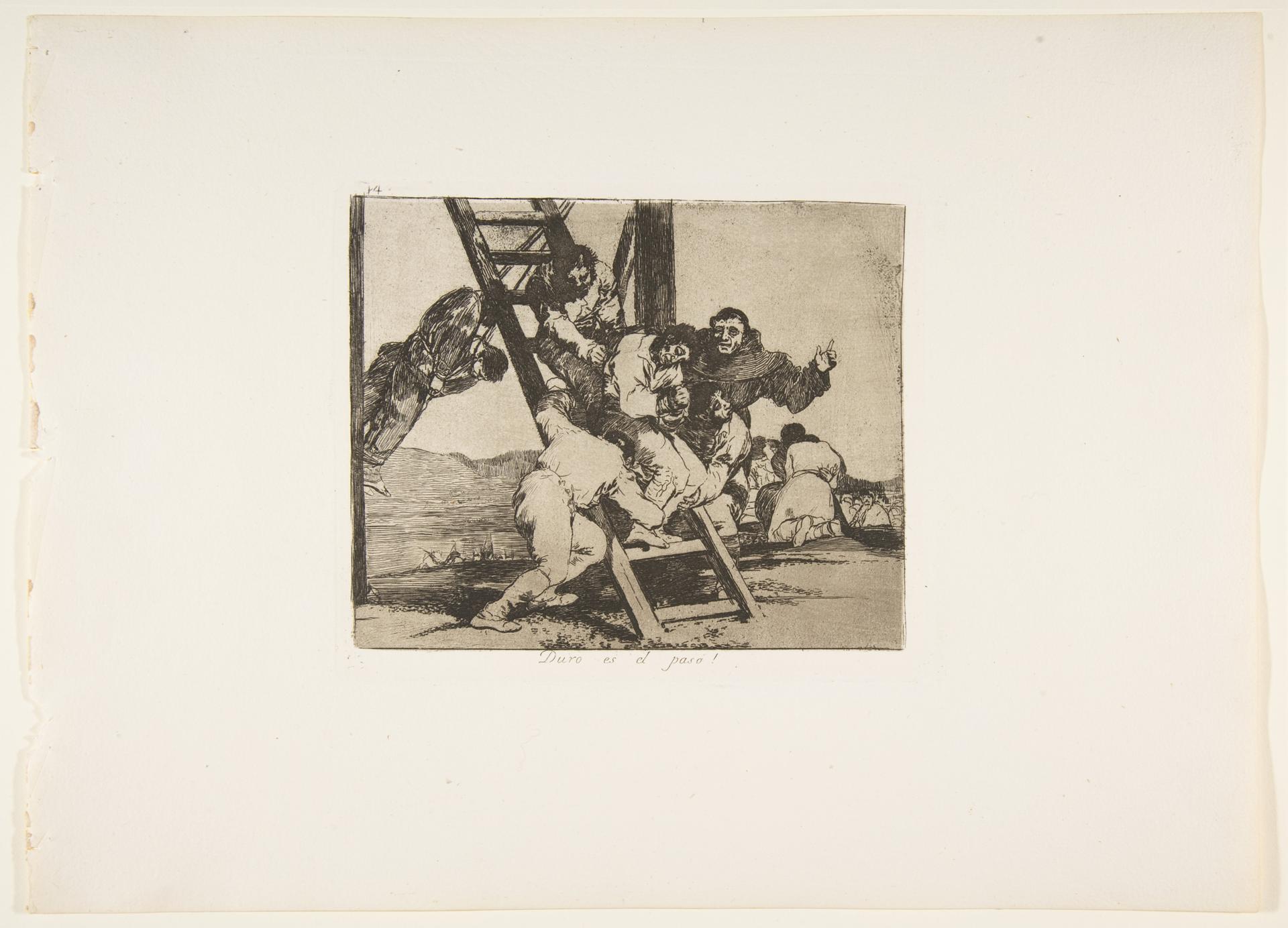
Plate 14 from "The Disasters of War" (Los Desastres de la Guerra): It's a hard step! (Duro es el paso!)
Original title: Plate 14 from "The Disasters of War" (Los Desastres de la Guerra): It's a hard step! (Duro es el paso!)
kurzbeschreibung
This print from Goya's series The Disasters of War was made around 1810 and published only in 1863. It presents a crowd in a turbulent situation, led by a central figure dressed in monk-like clothing. The graphic work was executed as an etching, enhanced with drypoint and burin.
Description
On a wooden scaffold, a man in a robe reminiscent of a monk's habit acts with his hand raised. Around him, several figures are scattered: some sitting on the ground, others standing or crouching. A bridge in the background points to an urban setting. Dark, subdued tones dominate the image, and the light remains undirected, deepening the somber atmosphere.
Context
The motif belongs to Los Desastres de la Guerra, a series Goya created between 1810 and 1820 and which appeared only in 1863 after his death. The plates capture the atrocities of the Spanish War of Independence against Napoleon. Goya, employed as a court painter, witnessed the horrors of war up close.
Impact
The muted colors and the heavy layout evoke a sense of threat and hopelessness. The gesture of the central man reads like an accusation directed at the viewer.
Technique
For this print, Goya used etching together with drypoint, burin, and lavished tone plates. This combination produces both precise lines and soft tonal transitions that carry the gloomy mood. The plate measures 14.2 × 16.8 cm, the paper 25.2 × 34.7 cm.
AI-generated description text
Source: Metropolitan Museum of Art · Public Domain (CC0 1.0)