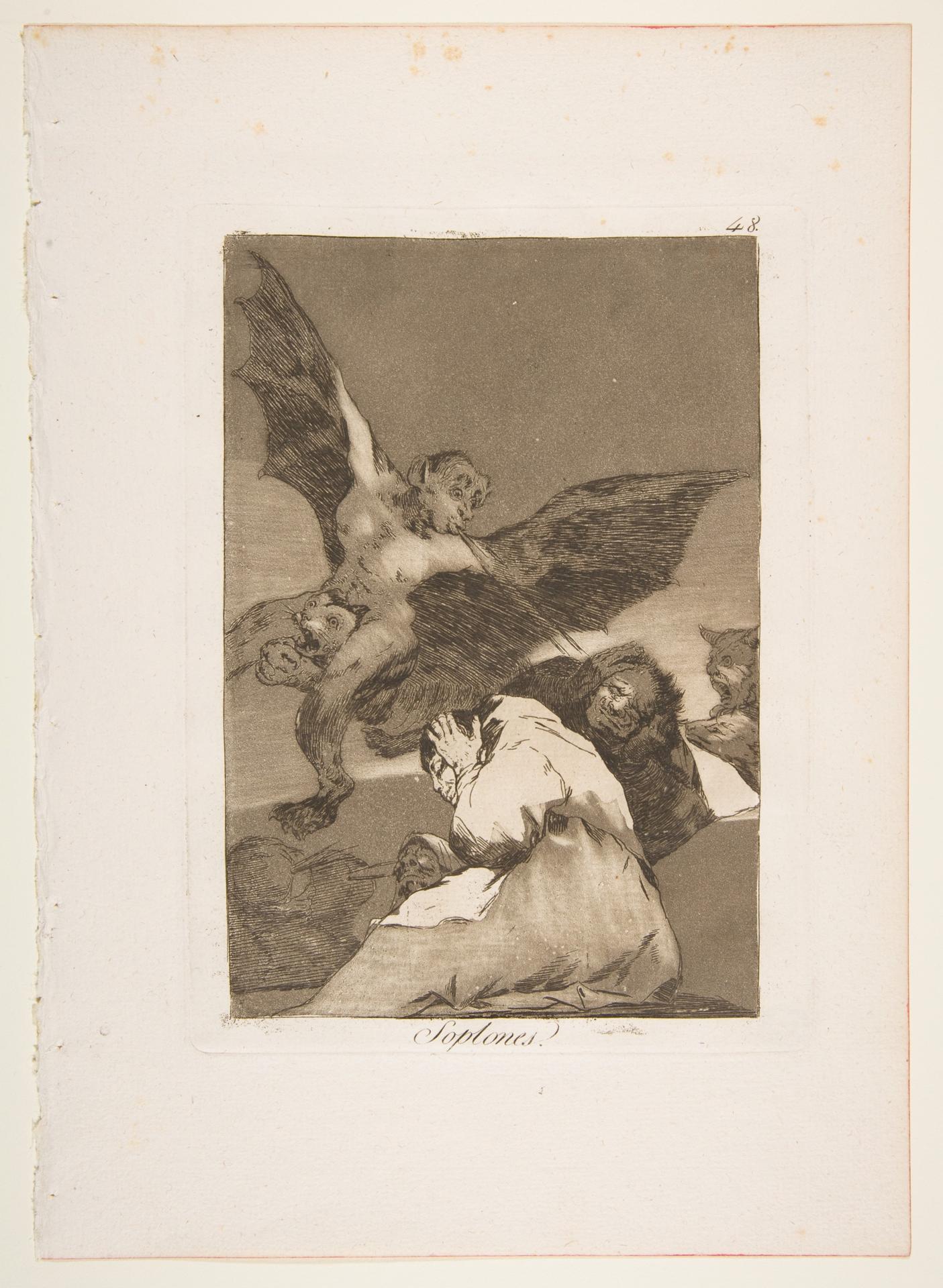
Plate 48 from 'Los Caprichos': Tale-Bearers--Blasts of Wind (Soplones)
Original title: Plate 48 from "Los Caprichos": Tale-Bearers--Blasts of Wind (Soplones)
kurzbeschreibung
Unlike the other plates in Los Caprichos, which often gather several figures in one room, Goya's etching Soplones (Ohrenbläser) from 1799 focuses on a single moment of distress: a kneeling figure is attacked by a winged demon. This work belongs to the 80-part print series and is executed as an etching with burnished aquatint.
Description
On the ground kneels a person wrapped in a long robe, arms raised protectively in front of their face. Above hovers a muscular demon with wings and a human face, its claws reaching downward. More winged beings appear in the background in threatening poses. Dark gray tones dominate the image, from which light picks out individual areas and heightens the tension. The expressive, detailed style points to Goya's satirical visual language.
Context
Los Caprichos was created between 1797 and 1799 and first published in 1799. The series of 80 etchings sharply criticizes superstition, corruption, and social ills in late 18th-century Spain. This plate 48 targets slander and malicious gossip, which Goya presents as destructive forces. During those years, the Spanish Enlightenment came under increasing pressure while the Inquisition regained influence.
Impact
A menacing, oppressive mood emerges, making clear the victim's powerlessness against the attacking forces. The dark tonality and dramatic lighting drive the impression of danger and persecution. The viewer is drawn directly into the action and confronted with the brutality of social defamation.
Technique
Goya used etching as his basic technique, achieving fine lines and details. Burnished aquatint allowed him graded gray tones and soft transitions, giving the image a painterly quality. Together, both methods enabled a precise rendering of light and shadow effects.
AI-generated description text
Source: Metropolitan Museum of Art · Public Domain (CC0 1.0)