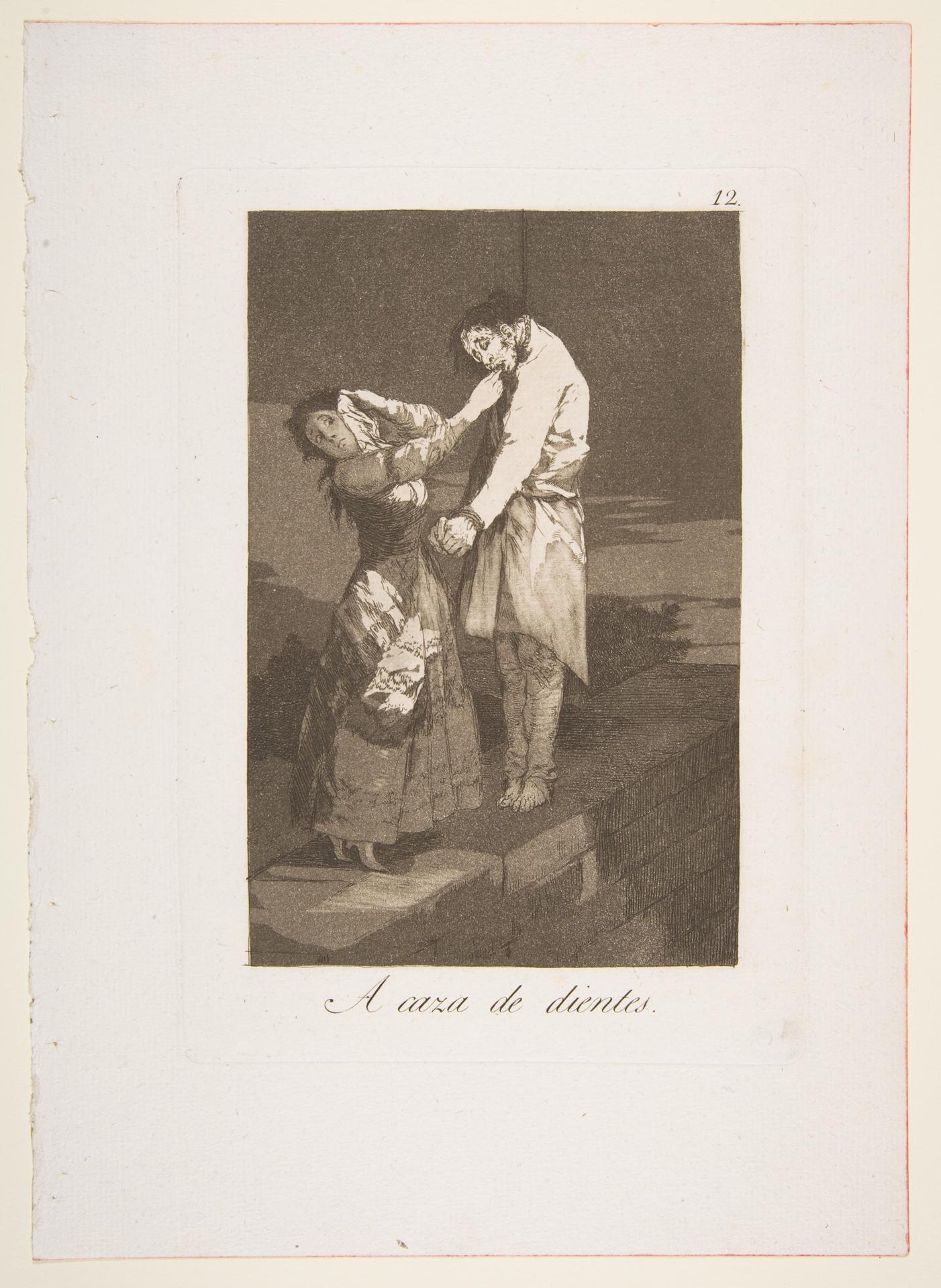
Plate 12 from "Los Caprichos": Out hunting for teeth (A caza de dientes)
Original title: Plate 12 from "Los Caprichos": Out hunting for teeth (A caza de dientes)
kurzbeschreibung
Francisco de Goya y Lucientes made the etching "On the Hunt for Teeth" in 1799, which shows a woman and a man on a platform. The print belongs to the series "Los Caprichos," a satirical attack on social ills. Goya used etching, burnished aquatint, and burin as printing techniques.
Description
A woman in a long, flowered dress holds a man by the arm; he wears a simple shirt and trousers, looks up at her, and seems to follow. Both stand on a central platform, while the background stays dark and undefined, making the figures stand out. The image is monochrome, with delicate shading from aquatint. The title "A caza de dientes" and the number "12" are engraved into the plate.
Context
Goya created this print in 1799 as part of "Los Caprichos," in which he lashed out at superstition, prostitution, and social grievances of his time. The series is considered a forerunner of modern graphic art and was originally planned to include 80 etchings. Goya worked on it during a phase when he was moving away from court painting and turning to satirical subjects.
Impact
The dark, almost monochrome design creates a gloomy, enigmatic mood that reinforces the satirical undertone of the scene. The posture and gaze of the figures seem animated, yet they also appear trapped in an eerie situation. The reduction to essentials draws attention to the relationship between the two people.
Technique
The print combines etching, burnished aquatint, and burin work, allowing for fine tonal gradations and deep shadows. The plate measures 21.6 × 15 cm, the sheet 29.4 × 21 cm. The interplay of etching and aquatint results in a nuanced handling of light characteristic of Goya's printed oeuvre.
AI-generated description text
Source: Metropolitan Museum of Art · Public Domain (CC0 1.0)