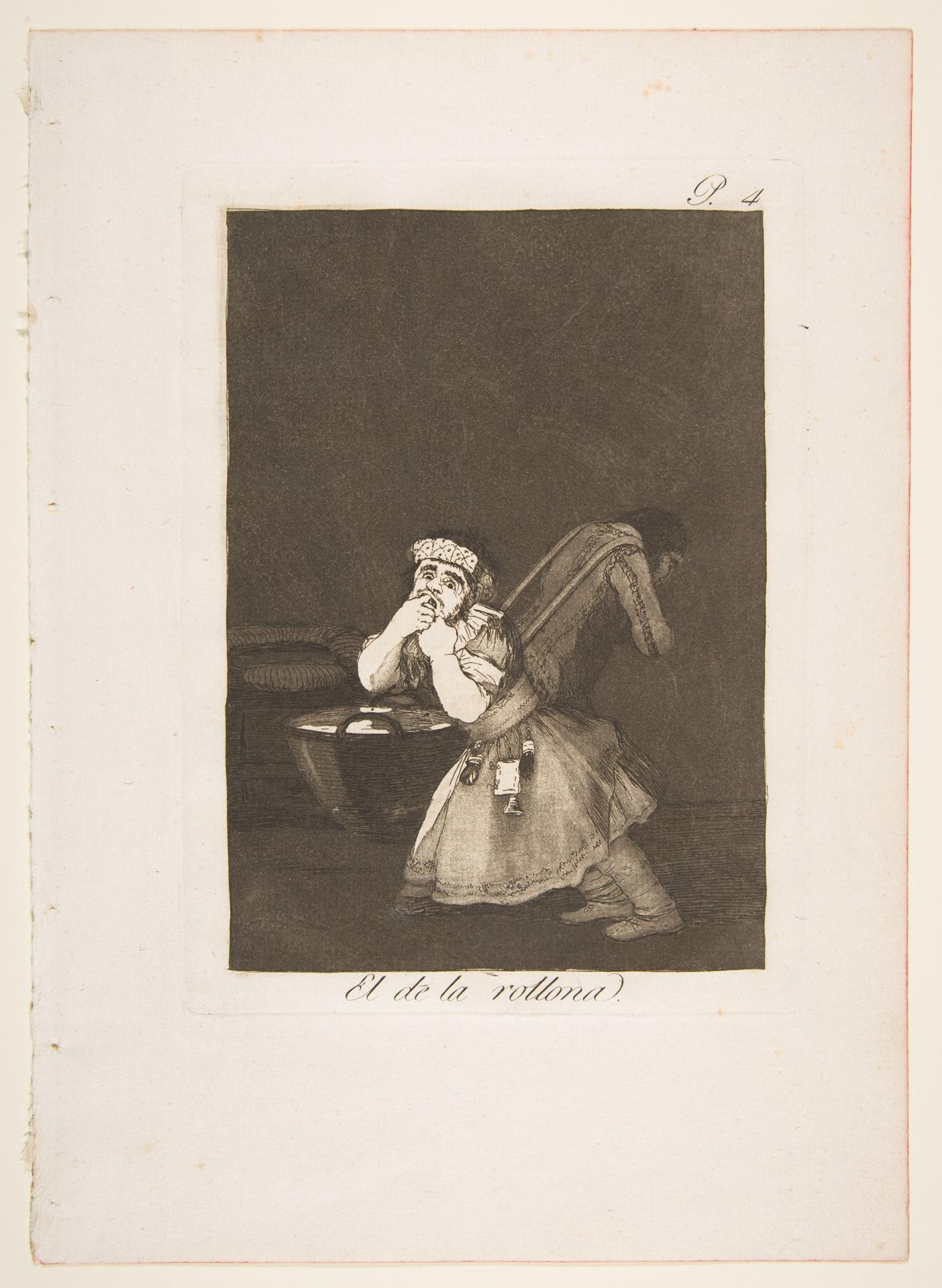
Plate 4 from "Los Caprichos": Nanny's boy (El de la rollona)
Original title: Plate 4 from "Los Caprichos": Nanny's boy (El de la rollona)
kurzbeschreibung
An adult figure in a long robe sucks at a tiny vessel — that motif defines the fourth plate from Goya's Los Caprichos of 1799. The etching with aquatint, in portrait format, measures 20.4 × 14.9 cm and ranks among the series' social-critical satires.
Description
In a dim interior, the figure leans slightly forward, a harp-like instrument pressed to its chest while it drinks from a minuscule container. A wide, traditional gown and a headdress that hides the face define the silhouette. Behind, a dark, blurred piece of furniture suggests spatial depth but narrows it. At the bottom appears the title 'El de la rollona', at upper right the page number 'P. 4'. The monochrome print stays in dark, muted tones, heightening the somber mood.
Context
Between 1797 and 1799 Goya created the series Los Caprichos, first published in 1799 as an album of 80 etchings. He used printmaking to indict human folly and social ills of his time, often with satirical or allegorical overtones. The plate 'El de la rollona' takes up a Spanish saying for a spoiled, childish child — here presented as an adult still hanging on the bottle. After publication the series was briefly withdrawn, presumably because of its sharp criticism of nobility and clergy.
Impact
A sense of oppression mixed with almost grotesque comedy arises from this juxtaposition of adult form and infantile dependence. The dark aquatint and reduced spatial depth direct the gaze to the absurd figure, whose posture seems at once ridiculous and threatening. Viewers are prompted to reflect on social softening and moral decay.
Technique
The plate was made as an etching with burnished aquatint; the aquatint produces soft tonal gradations and deep shadows. Etched lines define the contours, while aquatint models the dark areas. The paper size (29.3 × 21 cm) exceeds that of the plate, which points to a typical impression from the first edition.
AI-generated description text
Source: Metropolitan Museum of Art · Public Domain (CC0 1.0)