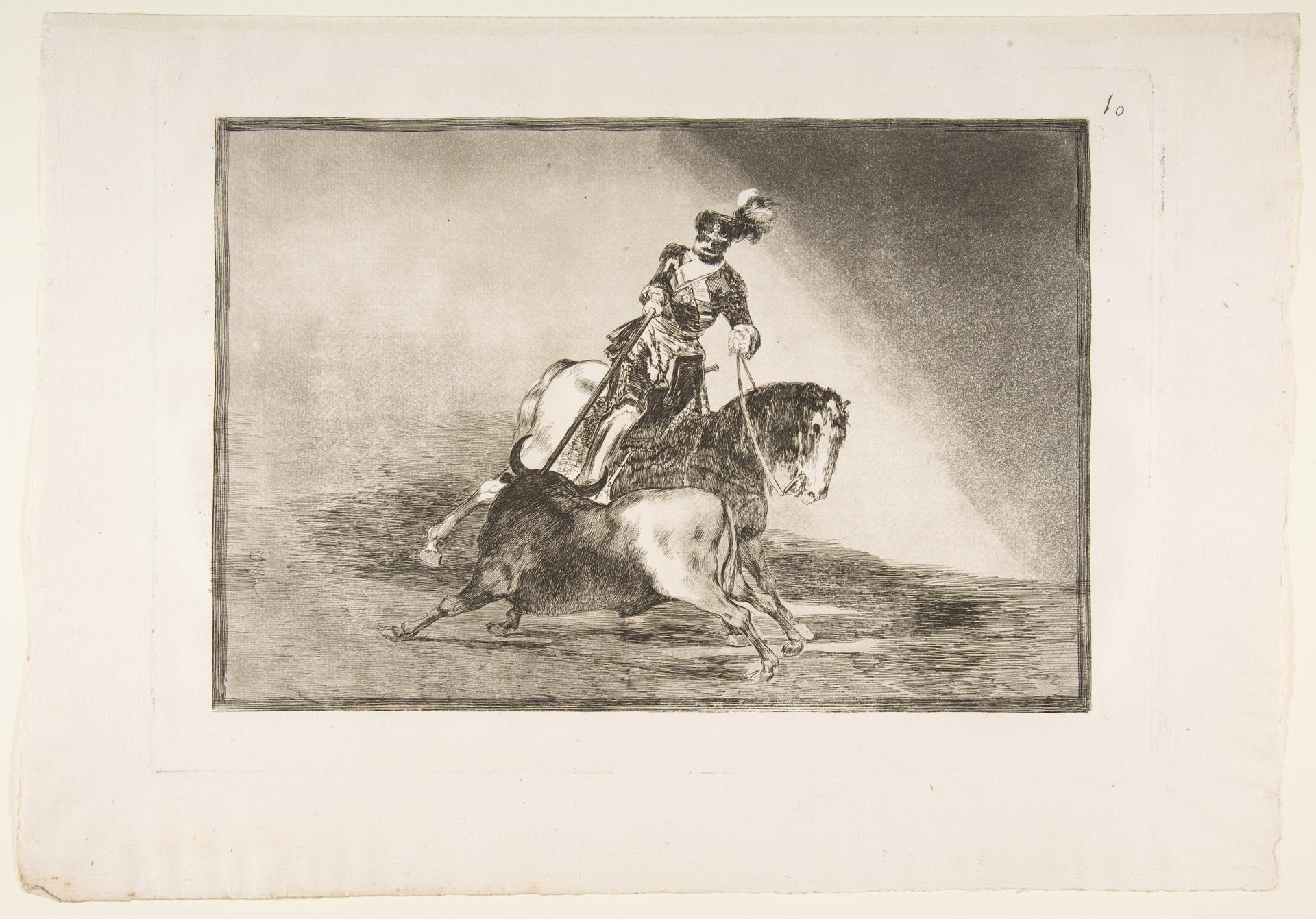
Plate 10 from 'La Tauromaquia': Charles V spearing a bull in the ring at Valladolid
Original title: Plate 10 from "La Tauromaquia": Charles V spearing a bull in the ring at Valladolid
kurzbeschreibung
In 1816 Francisco de Goya y Lucientes etched the tenth plate of his series 'La Tauromaquia'. It depicts Emperor Charles V charging a bull with a lance in the arena of Valladolid. For this motif Goya combined etching, aquatint, drypoint, and burin.
Description
In the foreground a man in bullfighter's attire, helmet, and jacket rides a horse with a saddlecloth. His lance pierces the bull's body, its legs extended as if just struck. The horse is shown in motion, heightening the tension of the instant. The background remains sparse and dark, pushing the figures forward. Black and white dominate; varying line thickness models texture and movement. In the upper right, the number '10' is engraved, identifying the sheet as part of the series.
Context
Between 1815 and 1816, during a period of political upheaval in Spain after the Napoleonic Wars, Goya created 'La Tauromaquia'. The motif refers to a sixteenth-century event: Emperor Charles V is said to have fought a bull himself in Valladolid on the occasion of the wedding of his son Philip II. With these historical bullfighting scenes, Goya aimed to record the tradition and history of bullfighting. The first edition of the series appeared in Madrid in 1816.
Impact
The stark black-and-white contrast and the moving figures produce an immediate, dramatic effect. Because the background stays dark and empty, attention focuses entirely on the violence and energy of the moment. The graduated lines give the image a palpable depth and draw the viewer into the action.
Technique
Etching, burnished aquatint, drypoint, and burin were combined here to achieve fine lines and tonal gradations. The aquatint lays soft, dark areas in the background, while drypoint and burin provide sharp, precise contours. The plate measures 24.8 × 35 cm, the sheet 30.5 × 43.8 cm – typical dimensions for prints in this series.
AI-generated description text
Source: Metropolitan Museum of Art · Public Domain (CC0 1.0)