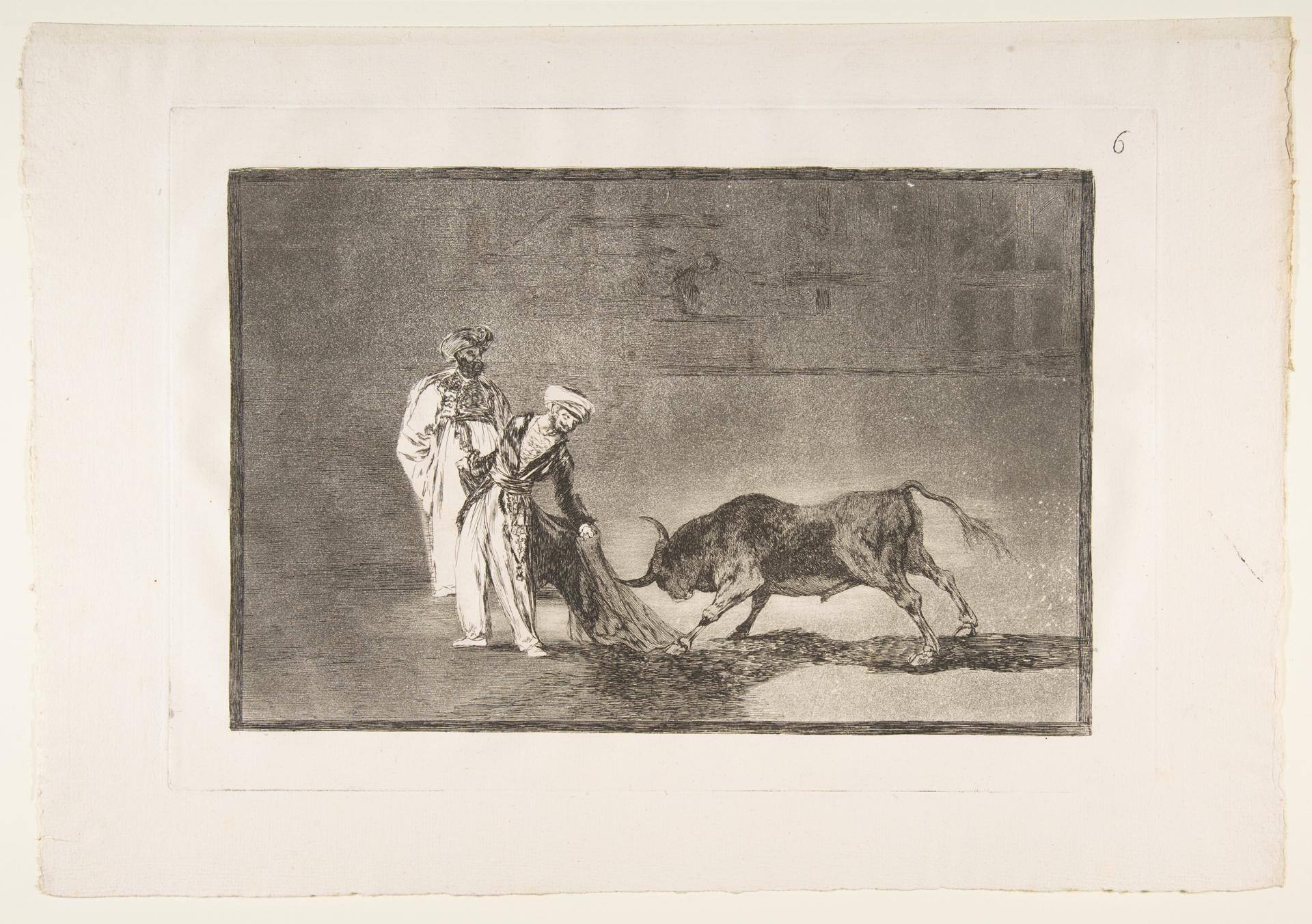
Plate 6 from 'La Tauromaquia': The Moors make a different play in the ring calling the bull with their burnous
Original title: Plate 6 from "La Tauromaquia": The Moors make a different play in the ring calling the bull with their burnous
kurzbeschreibung
Francisco de Goya y Lucientes made this sixth plate of his etching series 'La Tauromaquia' in 1816. It depicts two Moors engaging a bull in a bullfighting arena. The etching with aquatint and drypoint measures 24.5 x 35 cm (plate). The subject reflects a historical bullfighting practice: the Moors provoke the bull with their burnous, the long cloaks.
Description
A bull dominates the center, flanked by two men in Moorish attire with flowing cloaks and head coverings. The figures stand to the left, the bull to the right, creating an almost balanced arrangement. The background remains plain, hinting at an arena. Black and white dominate the image, with clear lighting and distinct shadows from the bull and men. The rendering appears realistic, with fine lines and tonal areas produced by the aquatint process.
Context
In 1816, the etching was created as part of 'La Tauromaquia', which Goya published in Madrid. The series comprises 33 plates and covers the history of Spanish bullfighting from its beginnings to the practice of his time. The presence of Moors as participants points to their presence on the Iberian Peninsula since the 8th century. During this period, Goya worked intensively on engaging with Spanish society and its traditions.
Impact
The arrangement feels calm yet tense, as the bull's posture and the men's movements suggest an anxious interplay. Sharp contrasts between light and shadow give the image dramatic depth. The Moorish figures in their traditional clothing evoke an exotic note that underscores the historical distance.
Technique
Etching with burnished aquatint and drypoint allows for fine tonal gradations and precise lines. The aquatint creates gray areas, while the drypoint provides strong, dark contours. Goya used these techniques to render the texture of the garments and the shadow effects of light in detail.
AI-generated description text
Source: Metropolitan Museum of Art · Public Domain (CC0 1.0)