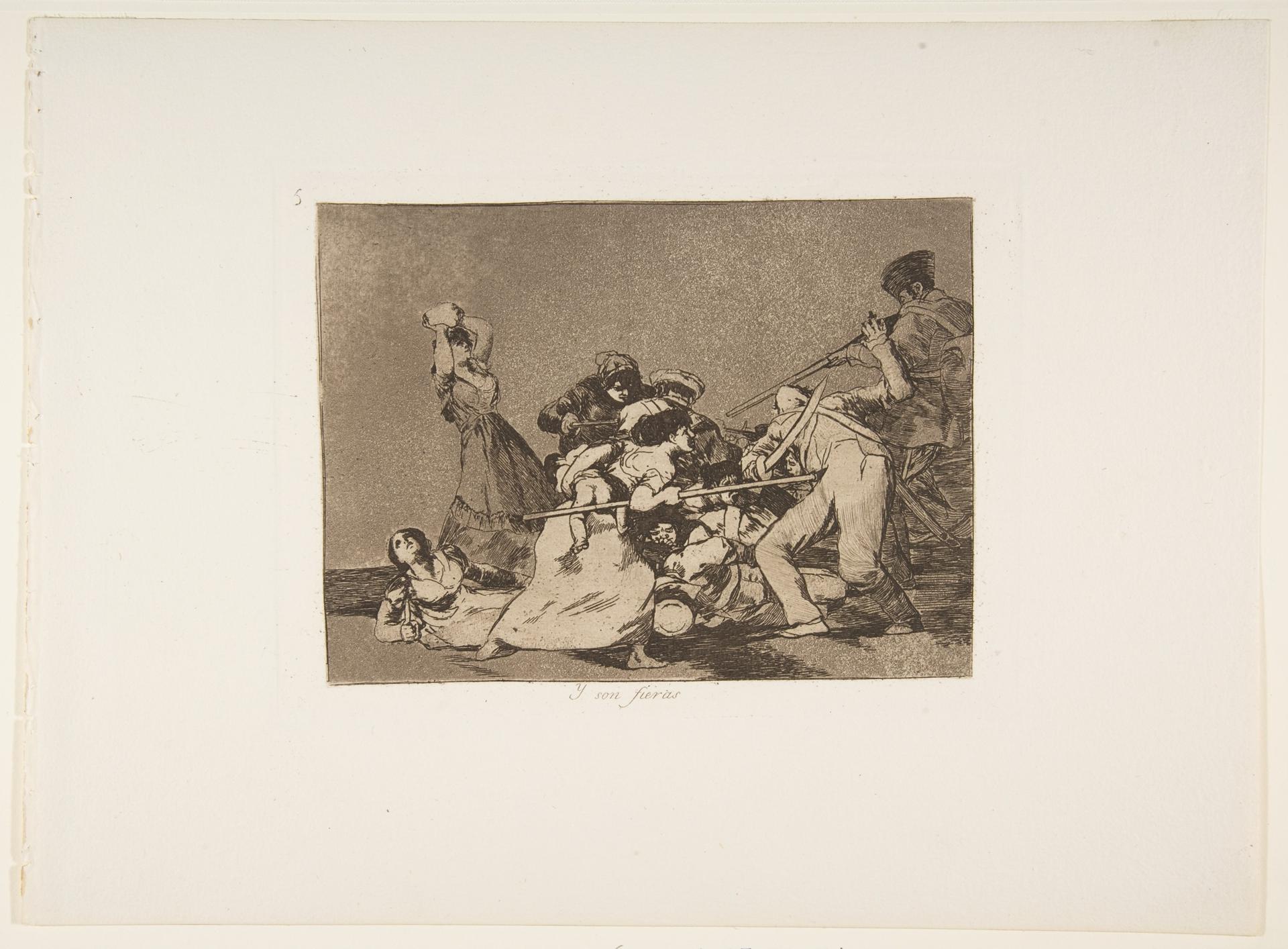
Plate 5 from "The Disasters of War" (Los Desastres de la Guerra): 'And they are like wild beasts' (Y son fieras)
Original title: Plate 5 from "The Disasters of War" (Los Desastres de la Guerra): 'And they are like wild beasts' (Y son fieras)
kurzbeschreibung
This fifth plate from Francisco de Goya's series 'The Disasters of War' (Los Desastres de la Guerra) was made in 1810 and first published in 1863. The artist used a mix of etching, burnished aquatint, and drypoint. It presents a violent confrontation among several people in a chaotic scene.
Description
Bodies lie on the ground, while figures above them strike or parry — the arrangement captures a group locked in heated combat. Some wear traditional Spanish clothing and wield weapons. Etching, aquatint, and drypoint combine to create a monochrome palette of grays. Light falls evenly, without harsh contrasts, reinforcing the somber mood.
Context
Between 1810 and 1820, Goya responded with this series to the Napoleonic Wars in Spain and the civil strife that followed. The plates, however, were not published until 1863, 35 years after the artist's death, by the Real Academia de Bellas Artes de San Fernando in Madrid. The title of this plate points to the dehumanization of the fighters, a recurring theme throughout the work.
Impact
The even lighting and the tightly packed group of figures evoke a sense of oppression and threat. Violence is presented without heroization, which feels both disturbing and documentary. The restriction to gray tones lends the subject additional gravity.
Technique
The plate was printed using a combination of etching, burnished aquatint, and drypoint. While aquatint provides subtle tonal gradations, drypoint contributes bold, irregular lines. The plate measures 15.2 × 20.7 cm, and the paper size is 24.6 × 34.1 cm.
AI-generated description text
Source: Metropolitan Museum of Art · Public Domain (CC0 1.0)