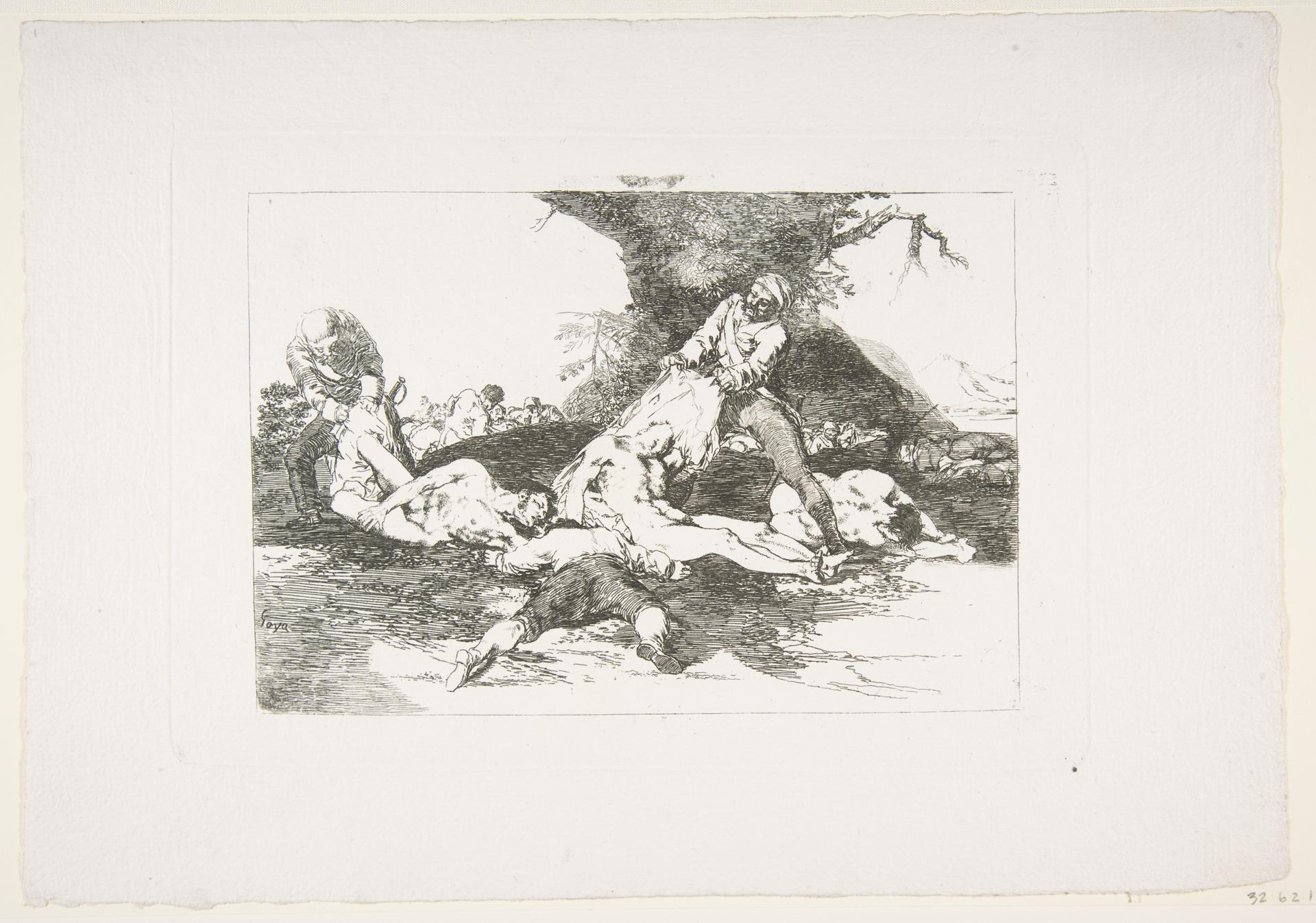
Plate 16 from 'The Disasters of War' (Los Desastres de la Guerra): 'They make use of them' (Se aprovechan)
Original title: Plate 16 from "The Disasters of War" (Los Desastres de la Guerra): 'They make use of them' (Se aprovechan)
kurzbeschreibung
Francisco de Goya y Lucientes devoted this sheet to the 16th position in his series 'Los Desastres de la Guerra' ('The Disasters of War'), created in 1810. Executed as an etching with drypoint, this is a proof impression. A group of people is seen in a barren landscape: two figures lie on the ground, while others move around them.
Description
Trees and rocks close off a gloomy, natural setting. Two people lie stretched out on the ground, while several others stand around them and are in motion—a restless, dramatic image. The irregular layout heightens the impact of the event. Muted light spreads over the sheet, creating an oppressive mood. The figures wear simple yet precisely rendered clothing; fine lines and graduated shading attest to the etching technique.
Context
Between 1810 and 1820, Goya responded to the Napoleonic Wars in Spain and the subsequent restoration with 'Los Desastres de la Guerra'. The plates remained unpublished during his lifetime; only in 1863 did the Real Academia de Bellas Artes de San Fernando issue the series. 'They make use of them' is one of the early pieces in the series that deals with guerrilla warfare and its consequences. Goya worked on the etchings in his Madrid house, where other famous print cycles such as 'Los Caprichos' also originated.
Impact
An oppressive atmosphere emerges, intensified by the dark landscape and the ambiguous action. The viewer is drawn into the violence of war without being given a clear moral judgment. Thanks to the precise etching technique, the sheet appears detailed and almost documentary—the horrors of war become immediately palpable.
Technique
Goya executed the work as an etching with drypoint on a copper plate. He used the etching technique for fine lines and drypoint for stronger, additional shading. In this proof impression, the plate is in an early state, offering insight into the artist's working process.
AI-generated description text
Source: Metropolitan Museum of Art · Public Domain (CC0 1.0)