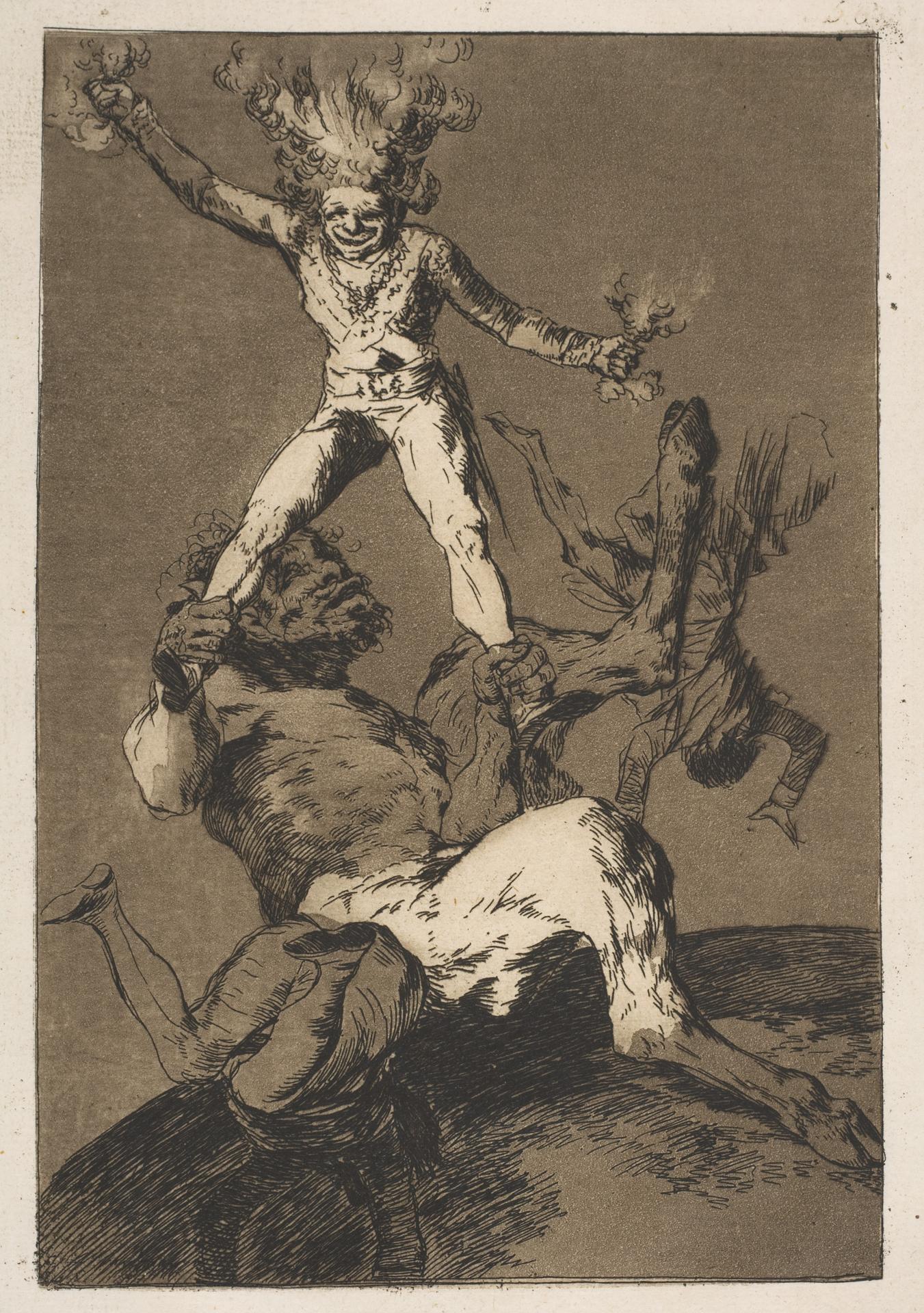
To rise and to fall (Subir y bajar) (1799, Met-Objekt 1461)
Original title: Plate 56 from "Los Caprichos": To rise and to fall (Subir y bajar)
kurzbeschreibung
Plate 56 from Francisco Goya's 'Los Caprichos,' dated 1799, presents an etched scene with one figure floating and another lying on the ground. The etching with aquatint measures 21.4 x 14.8 cm. It belongs to a series that attacks human follies and social ills.
Description
A central figure with a wavy headdress wears a shirt tied to a rope. Its limbs are stretched wide, giving the impression of floating or leaping, reinforced by flowing lines. At the bottom edge, a second figure lies curled up in defense or fear. Gray tones and harsh light-dark contrast create a gloomy, tense mood. The sharp, detailed lines heighten the intensity. The uneven distribution of the figures emphasizes unease and dynamism.
Context
Goya made 'Los Caprichos' in the 1790s, an era of political and social upheaval in Spain. The series comprises 80 etchings and appeared in 1799. It lashes out at superstition, corruption, and human vices. 'Subir y bajar' (Rise and Fall) is among the plates that address the fleeting nature of power and fortune. Created after a severe illness that cost Goya his hearing, the work reflects his dark worldview.
Impact
An oppressive tension arises between the floating figure and the one lying on the ground. The somber tone and dynamic layout evoke a sense of instability and impending fall. The viewer is reminded of the transience of rise and fall, yet no moral resolution is offered.
Technique
Etching with burnished aquatint allows fine linework and soft tonal gradations down to deep shadows. This process produces the strong light-dark contrast and richness of detail characteristic of Goya's printed work.
AI-generated description text
Source: Metropolitan Museum of Art · Public Domain (CC0 1.0)