The garroted man (El agarrotado)
Original title: The garroted man (El agarrotado)
kurzbeschreibung
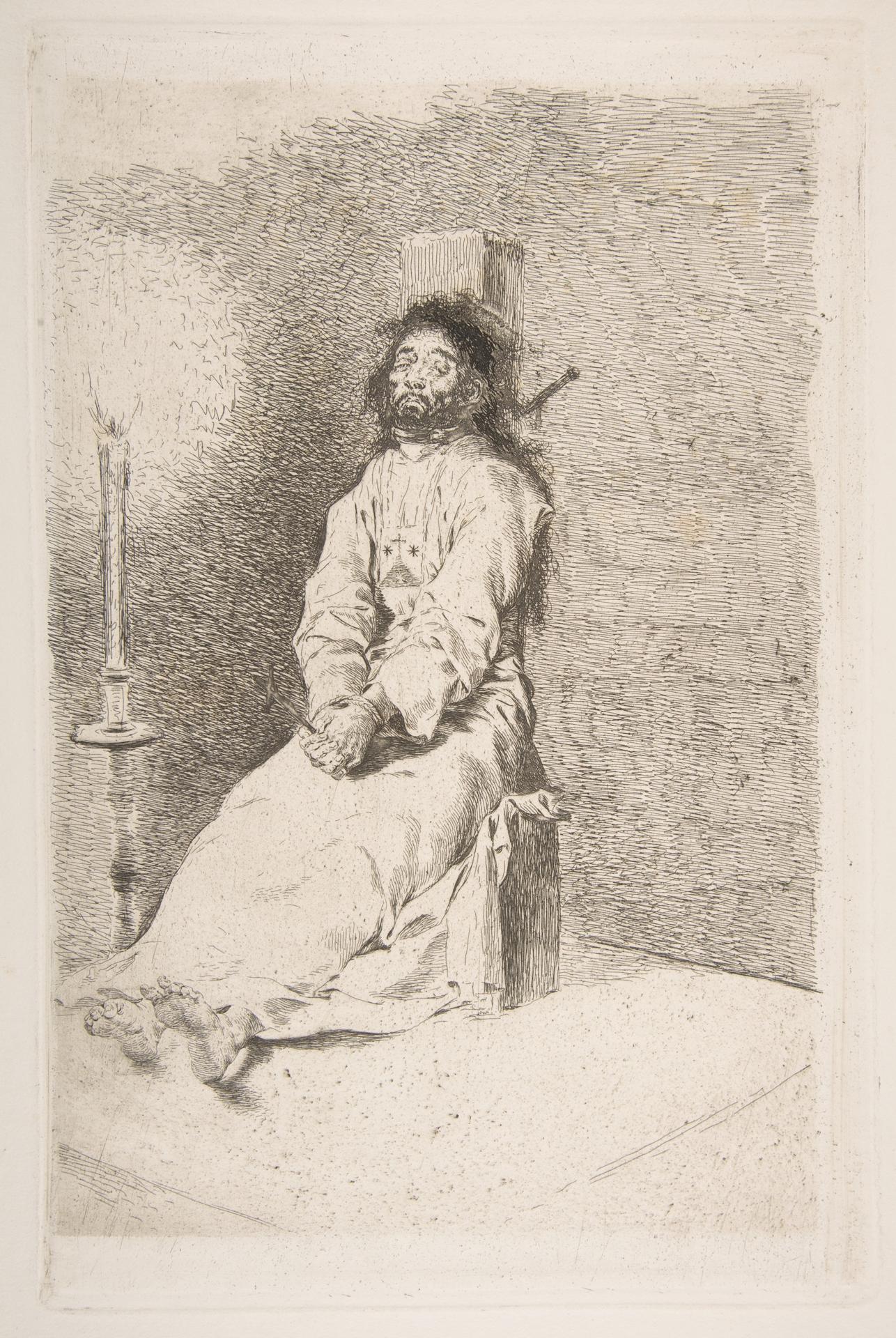
Francisco de Goya y Lucientes made the etching "The Garrotted Man" (El agarrotado) around 1775–78. It shows a seated, bound figure in simple clothing. This print belongs to Goya's early attempts at printmaking and was not published until 1868.
Description
A seated figure with arms tied in front dominates the image. He wears a plain robe marked with a star on the chest, his hair unkempt. A candlestick beside him provides only sparse light. The background remains dark and undefined, creating a somber atmosphere. Light entering from the left highlights the outlines of the person and the candlestick.
Context
Around 1775–78, when Goya settled in Madrid and received his first commissions for the Royal Tapestry Factory, this etching was made. It was published only in 1868, many years after his death. The subject of execution by garrote points to Spanish legal practice at the time. Later, in the Disasters of War, Goya would return to the theme of violence.
Impact
The central figure and the meager light pull the gaze and weigh on the mood. The darkness of the background heightens the isolation of the condemned man and stirs immediate sympathy. The sober depiction of the binding and the fixed stare makes the cruelty of the situation palpable.
Technique
Etching and burin are used together, allowing fine lines and precise shading. The monochrome gray tones result from the varying depth of the etched lines. Thus, garment and skin textures can be rendered in rich detail.
AI-generated description text
Source: Metropolitan Museum of Art · Public Domain (CC0 1.0)