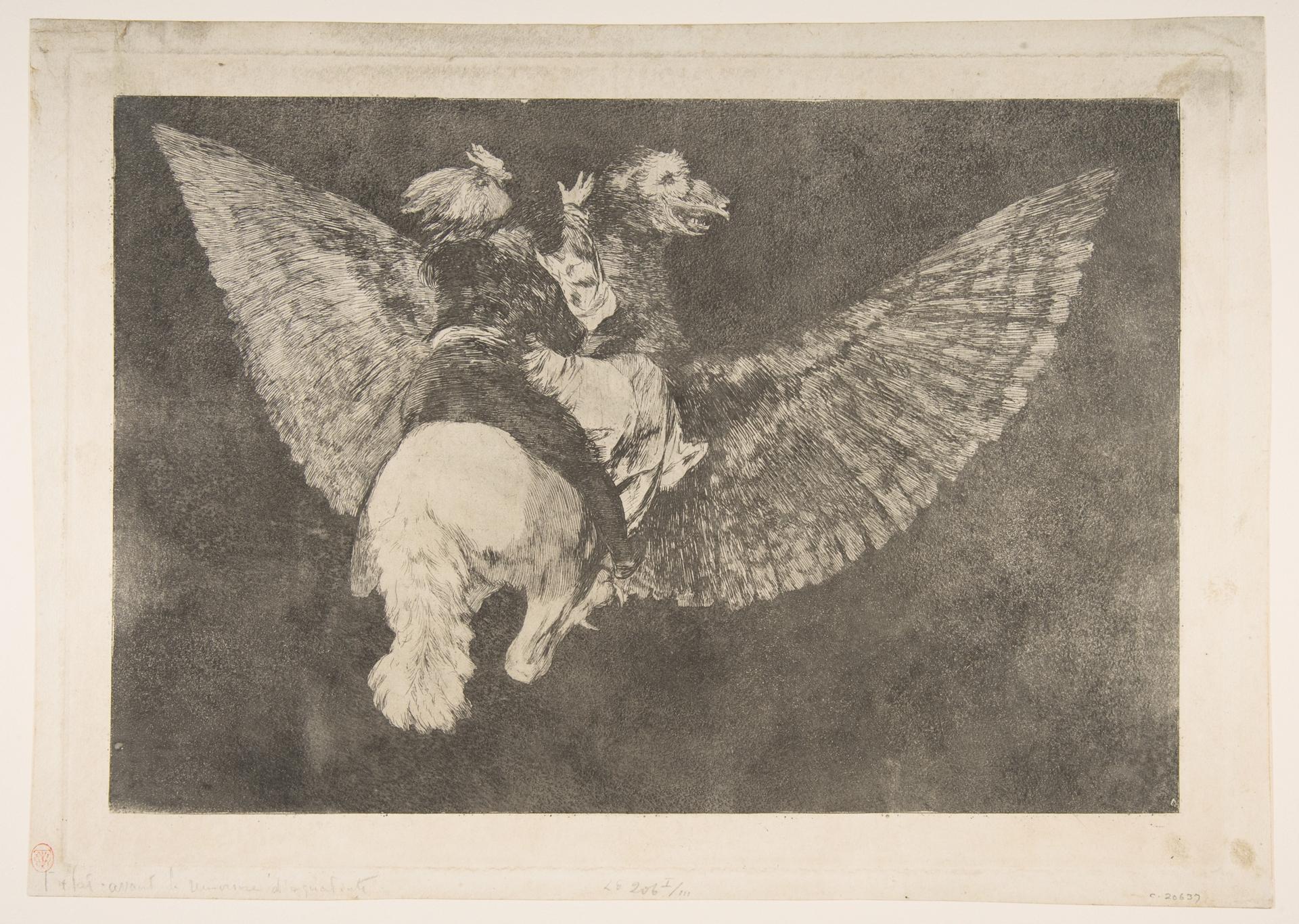
Flying Folly (ca. 1815–19 (private printing ca.1854))
Original title: 'Flying Folly' from the 'Disparates' (Follies / Irrationalities)
kurzbeschreibung
In Goya's etching and aquatint "Flying Folly" from the "Disparates" series, two figures ride a winged horse. Created around 1815–19 but not published until a private printing around 1854, the print sets these figures against a dark, indeterminate background.
Description
A horse with wings spread wide, seen from the side, dominates the layout. Two people sit on its back: one looks forward, the other backward. Their unusual proportions and the gloomy grey tonality make them appear grotesque and detached. The background remains dark and diffuse, giving the action a floating, surreal quality. Precise etched lines and soft aquatint shading shape the bodies and the wings.
Context
The "Disparates" series belongs to Goya's late period, when he increasingly broke away from social conventions and took up themes such as irrationality and human folly. During the artist's lifetime these etchings remained unpublished; only around 1854 did a private printing occur. Goya was then working in Spain under the conditions of political restoration, which shaped his pessimistic view of the world.
Impact
The motif conveys an unsettling, almost nightmarish mood that disturbs the viewer and prompts reflection. Because realistic animal depiction and fantastic elements collide, the print gains a timeless, surreal quality.
Technique
Etching and aquatint were used, a process that combines fine lines with tonal areas. The aquatint produces soft grey gradations that reinforce the gloomy atmosphere, while the etched lines contour the details of the figures and the horse.
AI-generated description text
Source: Metropolitan Museum of Art · Public Domain (CC0 1.0)