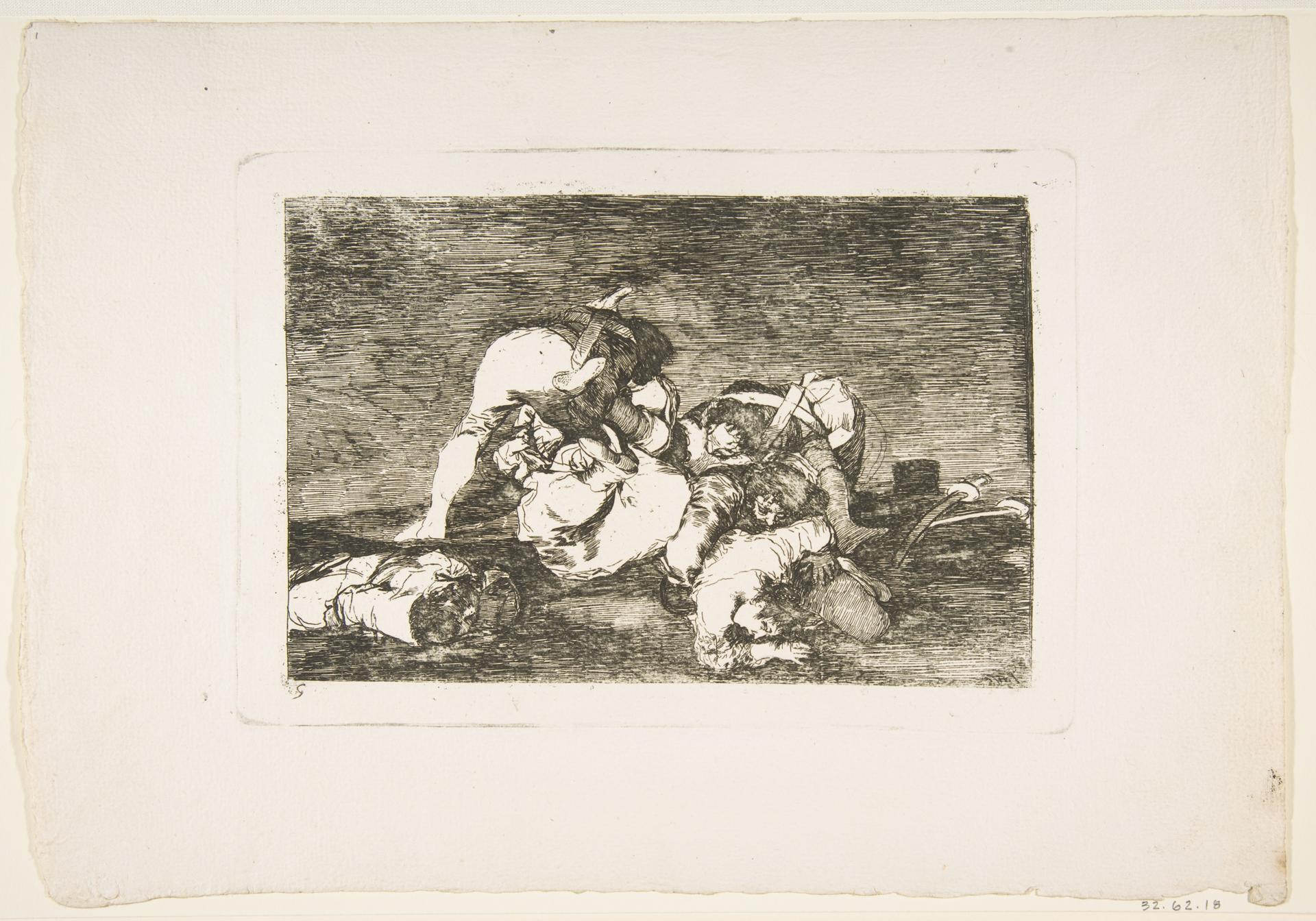
Plate 10 from 'The Disasters of War' (Los Desastres de la Guerra): 'Nor do these' (Tampoco)
Original title: Plate 10 from "The Disasters of War" (Los Desastres de la Guerra): 'Nor do these' (Tampoco)
kurzbeschreibung
A group of people lying on the ground, visibly wounded or dying, appears in this print from Francisco de Goya's etching series 'The Disasters of War', made in 1810. It is a proof impression produced before the caption was added.
Description
Several figures sprawl on the ground in contorted poses: some clearly injured or dying, others tend to them or rest exhausted nearby. Their plain but detailed clothing suggests different social stations. A dark, indistinct background pushes the central group forward. One figure holds an object resembling a shield or a tool. The etching remains in black and white; fine lines and hatching create texture and movement.
Context
Between 1810 and 1820 the series emerged as a response to the Napoleonic occupation of Spain and the Spanish War of Independence. Publishing it during Goya's lifetime was too politically risky, so the plates appeared only posthumously in 1863. This impression is a proof before the caption was added. The series is considered an unflinching account of wartime atrocities, turning against both sides.
Impact
The densely packed, almost overcrowded group creates an oppressive and pitiable mood. Because spatial depth is absent and the light stays even, the depicted hardship feels immediate. Without narrative distraction, the viewer is confronted directly with suffering.
Technique
The print was executed as an etching with drypoint on paper. Goya's precise handling of the etching technique shows in the fine lines and hatching. The proof impression reveals work on the plate before the final inscription.
AI-generated description text
Source: Metropolitan Museum of Art · Public Domain (CC0 1.0)