The cloaked man
Original title: The cloaked man
kurzbeschreibung
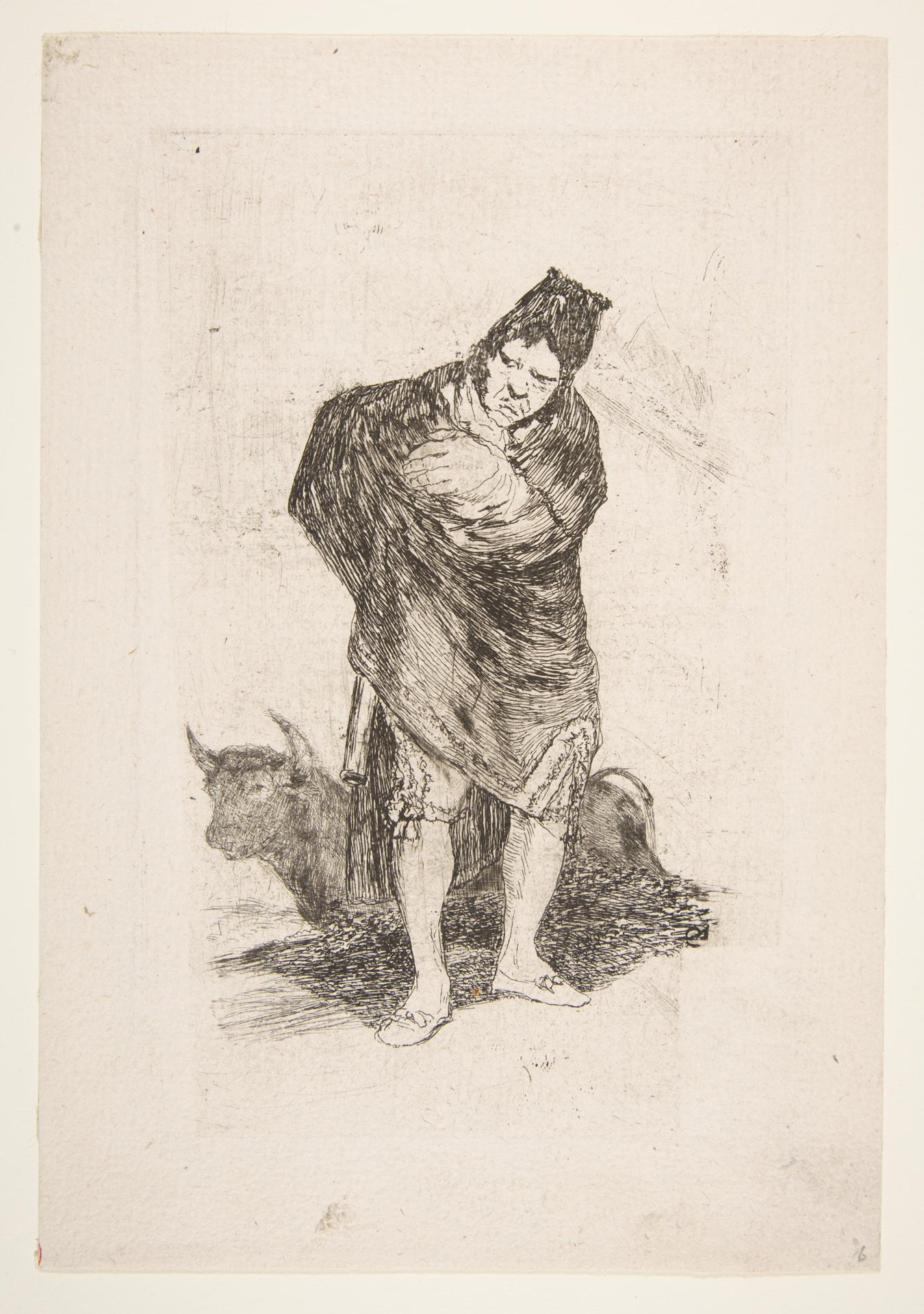
Francisco de Goya y Lucientes made the etching and drypoint "Der Vermummte" in 1859. It shows a figure wrapped in a long robe, holding a staff and keeping company with an animal behind them.
Description
A figure is wound entirely in a loose robe that coils around the body; the right hand grips a long staff. The figure leans slightly left, eyes cast down, feet bare. An animal, probably an ox or a donkey, becomes visible behind them. The arrangement stays plain, setting figure and beast against a single black-and-white ground.
Context
The sheet belongs to Goya's late period, when dark and socially critical subjects dominated his work. He often turned to etching and drypoint then, aiming for expressive, high-contrast effects. The masked figure may point to social or political oppression, a theme that recurs throughout his late output.
Impact
Sharp contrasts of light and dark, together with the concentrated layout, make the image feel insistent and puzzling. The bent posture and lowered gaze stir a sombre, brooding mood that holds the viewer's attention.
Technique
The print was executed as an etching with drypoint on paper. Drypoint yields fine, burred lines that give the subject its own texture. Light falls on the scene from the front, so shadows and the folds of the robe are worked out precisely.
AI-generated description text
Source: Metropolitan Museum of Art · Public Domain (CC0 1.0)