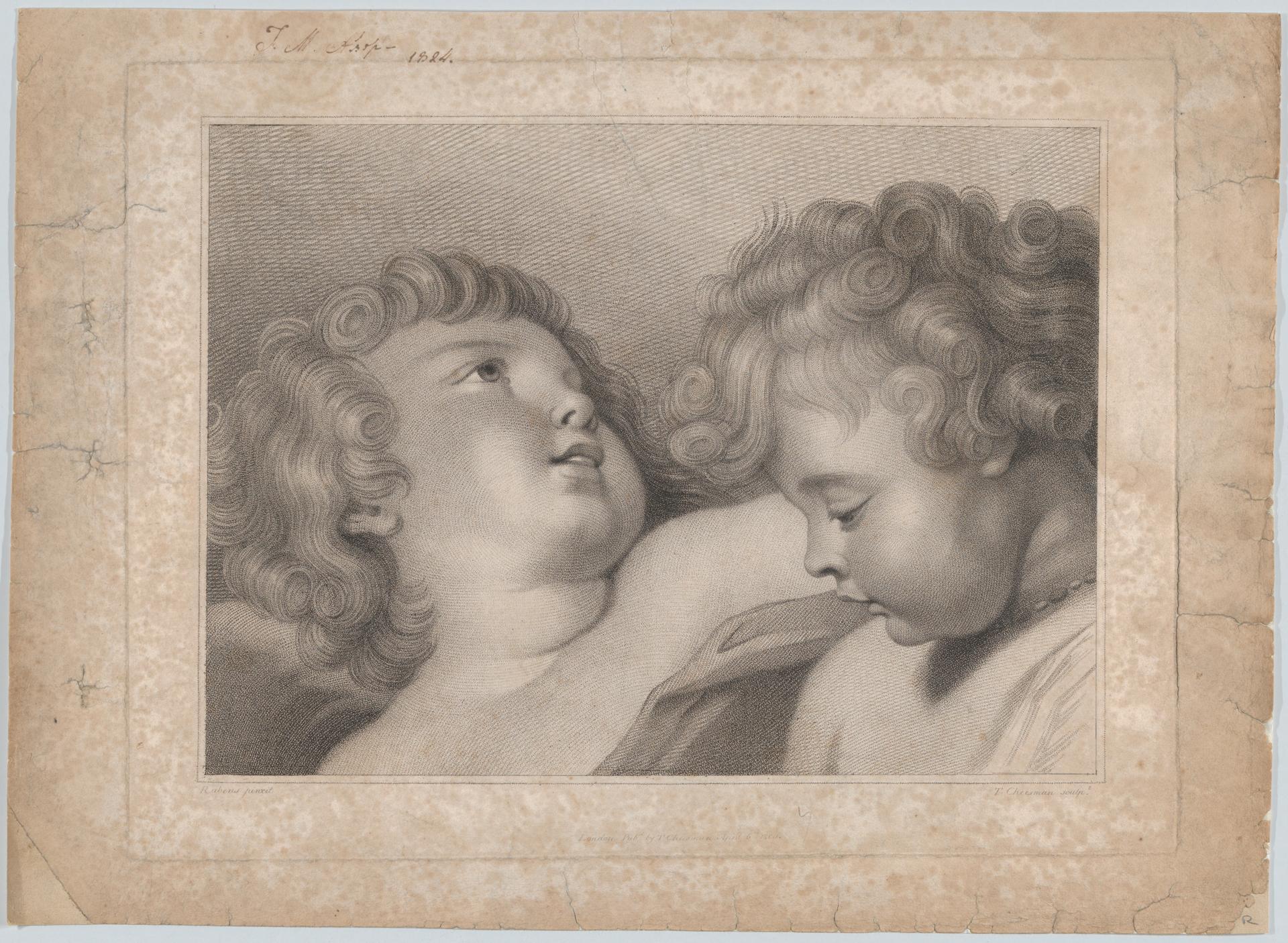
Two heads of cherubs
Original title: Two heads of cherubs
kurzbeschreibung
Thomas Cheesman engraved "Two Cherub Heads" in 1800 as a stipple engraving. Two angelic heads lie side by side, rendered in the fine dotted manner characteristic of this printing process. The sheet measures 39.6 × 54.5 cm, the plate 34.5 × 45.4 cm.
Description
Two cherub heads rest close together. The one on the left turns upward, while the right head is lowered. Curls frame both faces, and the feet are bare. The background remains flat and without much detail, allowing the expressions to stand out. Tones of gray at varying brightness, formed from tiny dots, define the monochrome image. An even light falls on the faces, with hardly any shadows.
Context
Cheesman worked as a British engraver in London around 1800. In England, stipple engravings were prized in the late 18th and early 19th centuries, especially as reproductions of paintings. Cherubs belonged to the common repertoire of motifs of the era, whether as decorative elements or in religious contexts. The print may have stood alone or been part of a series with genre scenes and allegorical subjects.
Impact
The dotted technique produces a soft, almost painterly impression that brings out the delicate features of the cherubs. The layout is calm and symmetrical, and the even light creates a harmonious, idyllic mood. Because color is absent, the curls and expressions come to the fore.
Technique
In stipple engraving, the image is built from fine dots rather than lines. This allows gradations between light and dark, as seen in the gray values of the cherubs. Printing was likely done from a copper plate that had been worked with a burin or a roulette tool.
AI-generated description text
Source: Metropolitan Museum of Art · Public Domain (CC0 1.0)