Cabinet
Original title: Cabinet
kurzbeschreibung
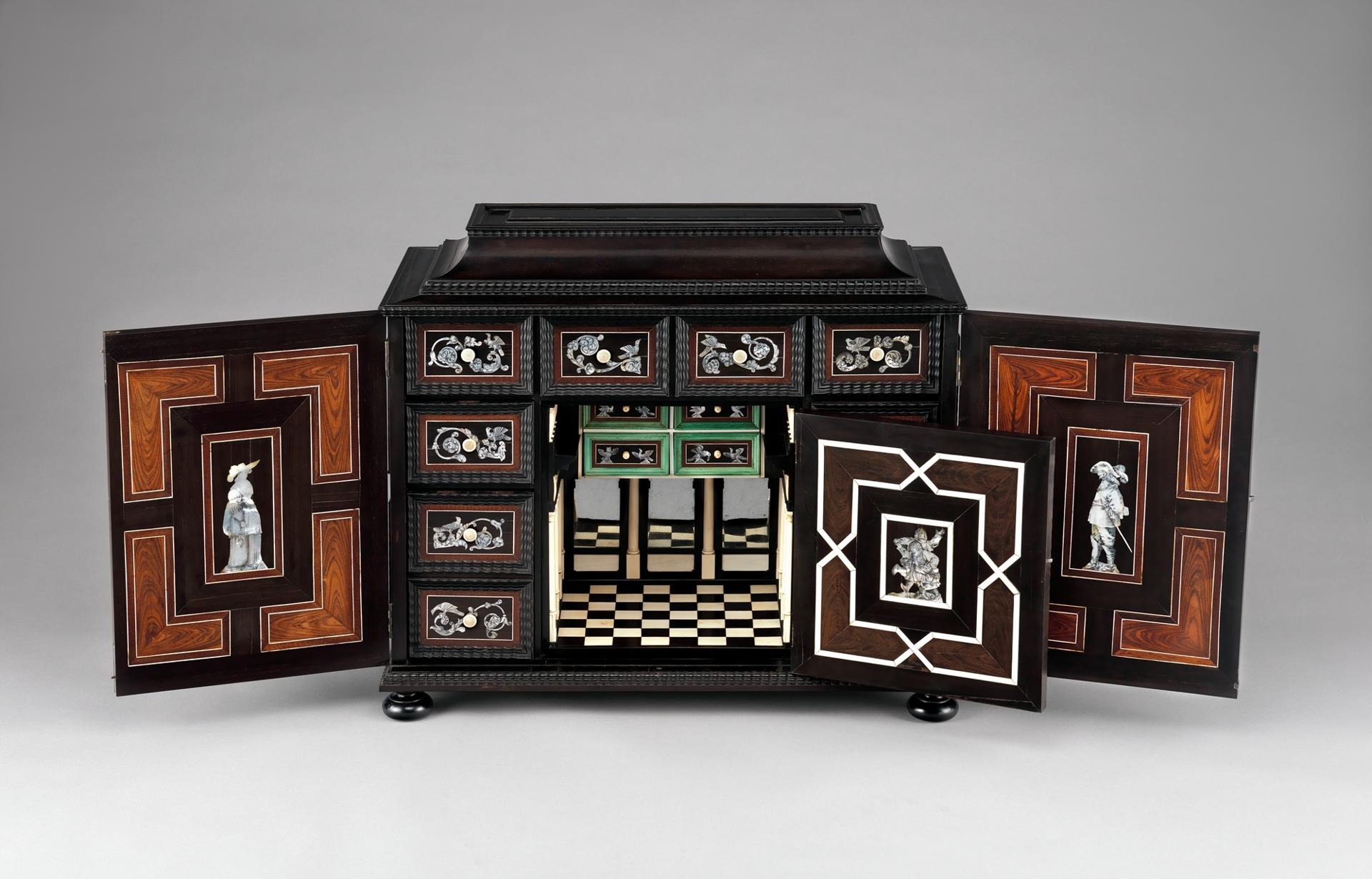
Between 1640 and 1650, Herman Doomer made this cabinet. Oak serves as the core, covered with veneers of ebony, snakewood, rosewood, kingwood, and cedar. Added to this are inlays of mother-of-pearl, ivory, and green-stained bone. The cabinet belongs to the luxurious furniture art of the Dutch Golden Age.
Description
Geometric patterns and figurative reliefs are set into the wood on the cabinet doors. The insides of the doors also carry reliefs with a historical scene. Inside the cabinet, a black-and-white checkered pattern appears, visible through the open door. Dark woods and light inlays create a strong contrast.
Context
Herman Doomer was a Dutch cabinetmaker active in Amsterdam in the 17th century. Cabinets of this kind were made as prestige objects for wealthy merchants and patricians. They stored valuables such as jewelry, coins, or collectibles. Exotic woods and precious materials point to the international trade of the Netherlands at that time.
Impact
The dark, noble surface and the precisely inlaid patterns make the cabinet appear precious. Fine reliefs and the symmetrical design give it a calm, stately presence. The open door invites you to discover the detailed interior design.
Technique
Oak wood serves as the base, covered with thin veneers of various fine woods. For the decorations, pieces of mother-of-pearl, ivory, and stained bone were set into the surface. This inlay work demanded high precision and craftsmanship.
AI-generated description text
Source: Metropolitan Museum of Art · Public Domain (CC0 1.0)