Portrait of an Old Man with a Beard
Original title: Portrait of an old man with a beard
kurzbeschreibung
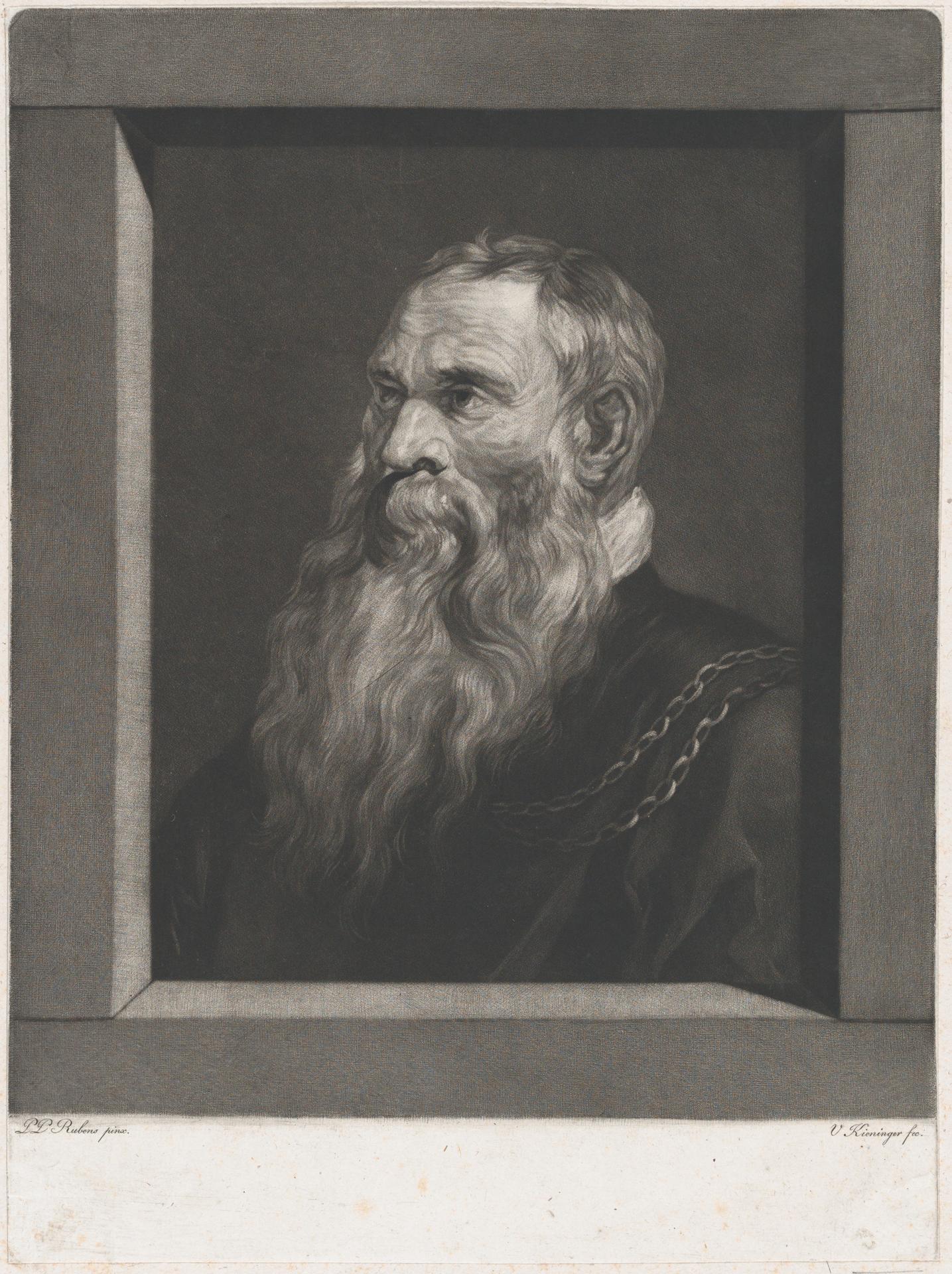
This mezzotint by Vincenz Georg Kininger dates from around 1787–1851. It portrays an older gentleman with a long, wavy beard, dressed in a dark garment and wearing a necklace, set against a plain background. The mezzotint technique produces soft grey gradations and nuanced shadow areas.
Description
An old man with a long, wavy beard emerges, clad in a dark robe with a visible collar and a chain. His gaze is serious and contemplative; the background remains dark and understated, so that the sitter commands attention. The layout is centrally aligned, with the head as the focal point. Rendered in monochrome greys, as is typical of mezzotint, the hair and beard stand out clearly through nuanced shading and texture.
Context
Vincenz Georg Kininger was an Austrian artist active in the late 18th and early 19th centuries. Mezzotint was a common technique for portraits in the 18th century because it allowed for gentle tonal transitions. A definitive date of creation is lacking; the indication ca. 1787–1851 refers to Kininger's creative period. The subject is presumably a real person, but who the sitter was is not recorded.
Impact
The dark, restrained design creates a concentrated, almost confidential mood and brings the man's serious facial expression to the fore. Through the graduated grey values of the mezzotint, the portrait gains a painterly effect that draws the eye to the facial features and beard.
Technique
The print was made using the intaglio method of mezzotint, in which the plate is roughened by rocking or etching to obtain tonal values. Depending on how much the plate is smoothed, the grey tones emerge; rougher areas remain dark. The paper measures 33.3 × 24.7 cm and is trimmed, suggesting later treatment.
AI-generated description text
Source: Metropolitan Museum of Art · Public Domain (CC0 1.0)