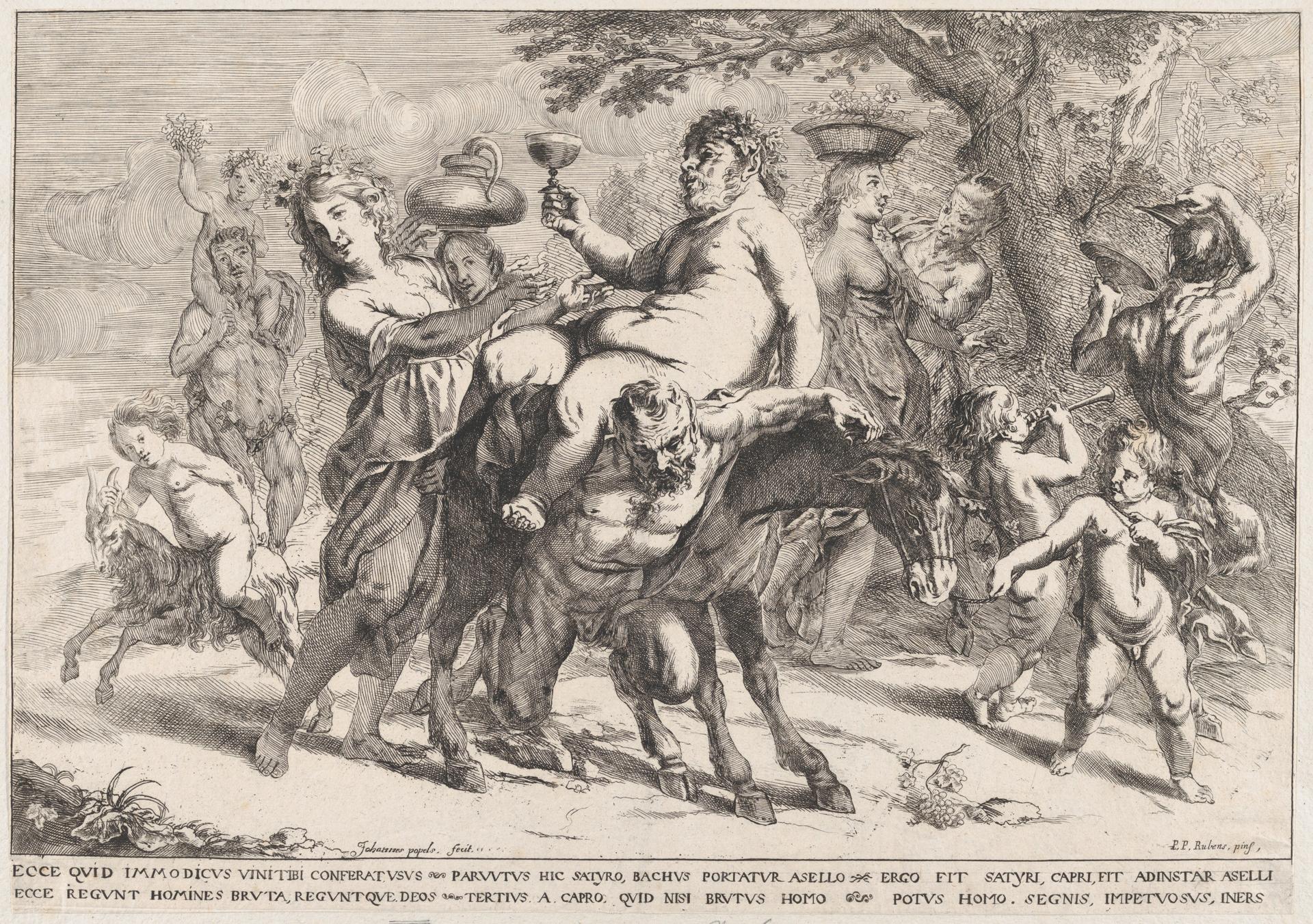
The Triumph of Bacchus (1633–63)
Original title: The Triumph of Bacchus
kurzbeschreibung
Jan Popels's etching "The Triumph of Bacchus," made between 1633 and 1663, presents the wine god in a boisterous scene surrounded by mythological figures. The print captures a Bacchic procession as a lively event set in a rural landscape.
Description
Bacchus sits at the heart of the image, riding a donkey and holding a wine cup. Satyrs, nymphs, and other mythical beings crowd around him, some carrying jugs and pots full of wine. A goddess offers Bacchus a pitcher. The figures wear garments reminiscent of antiquity; trees and plants frame the action. The arrangement is restless, with characters moving in various directions, while the etching's gray tones bring out the contours.
Context
Jan Popels was a Flemish artist active in the first half of the 17th century. His work belonged to an era when mythological subjects found great favor in the Netherlands and Flanders. This etching is part of an extensive graphic oeuvre shaped by the Italian Renaissance. Nothing is known about the exact circumstances of its creation, but the triumph of Bacchus was highly popular in the Baroque period.
Impact
The lively festivities immediately draw the viewer in. The movement of the figures and the careful linework create a dynamic yet solemn mood. Clear contours and even lighting give the print a classical elegance.
Technique
The etching, an intaglio process in which the drawing is bitten into a metal plate, displays precise and detailed lines, suggesting careful execution. The graduated gray tones produce a high-contrast effect that emphasizes the figures.
AI-generated description text
Source: Metropolitan Museum of Art · Public Domain (CC0 1.0)