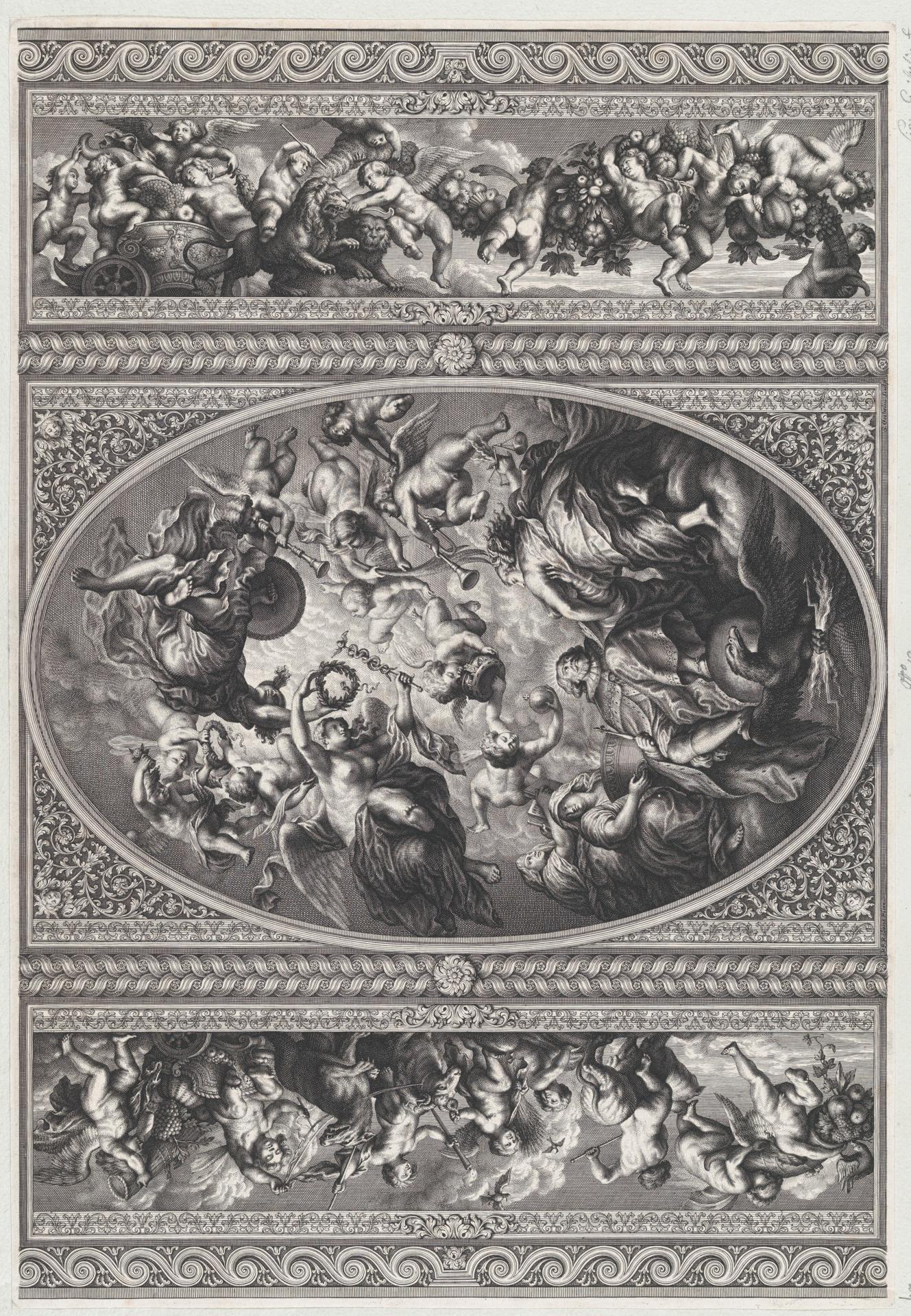
The Apotheosis of James I in an Oval at Center, Friezes with Putti and Garlands on Either Side
Original title: The apotheosis of James I in an oval at center, friezes with putti and garlands on either side
kurzbeschreibung
A large oval dominates this sheet by Simon Gribelin II from 1720: the apotheosis of James I. Flanking it, friezes with putti and garlands extend to either side. The engraving glorifies the English king in allegorical form and belongs to the decorative printmaking of the Baroque.
Description
Music-making and celebrating figures fill the oval, surrounded by instruments, fruit and flowers; their posture is animated, their nature angelic or divine. Left and right the friezes continue with putti who likewise carry fruit and blossoms. An ornamental frame encloses the whole arrangement. The image stays monochrome, evenly lit, with depth achieved only through hatching and contrasts of line.
Context
Gribelin, a French-English copperplate engraver working in London, was known for his reproductive prints. Made in 1720, roughly a century after the death of James I (1566–1625), the sheet takes its place in a series of royal subjects. Allegories of this kind often served in Baroque art to stress the divine legitimation of monarchy. Gribelin frequently worked for wealthy patrons and also issued his own prints.
Impact
A ceremonial calm emanates from the symmetrical arrangement and the ornamental frame, yet the sheet stays in motion: the figures in the oval, the abundance of fruit and flowers draw the eye into the heavenly sphere of the apotheosis. Balanced contrasts and careful draughtsmanship give the print a stately, noble bearing.
Technique
Gribelin worked in copperplate engraving: lines were cut into the plate and then printed. Fine hatching and cross-hatching produce graded greys and a sense of volume. Even lighting and precise rendering of detail match the printmaking of the early eighteenth century.
AI-generated description text
Source: Metropolitan Museum of Art · Public Domain (CC0 1.0)