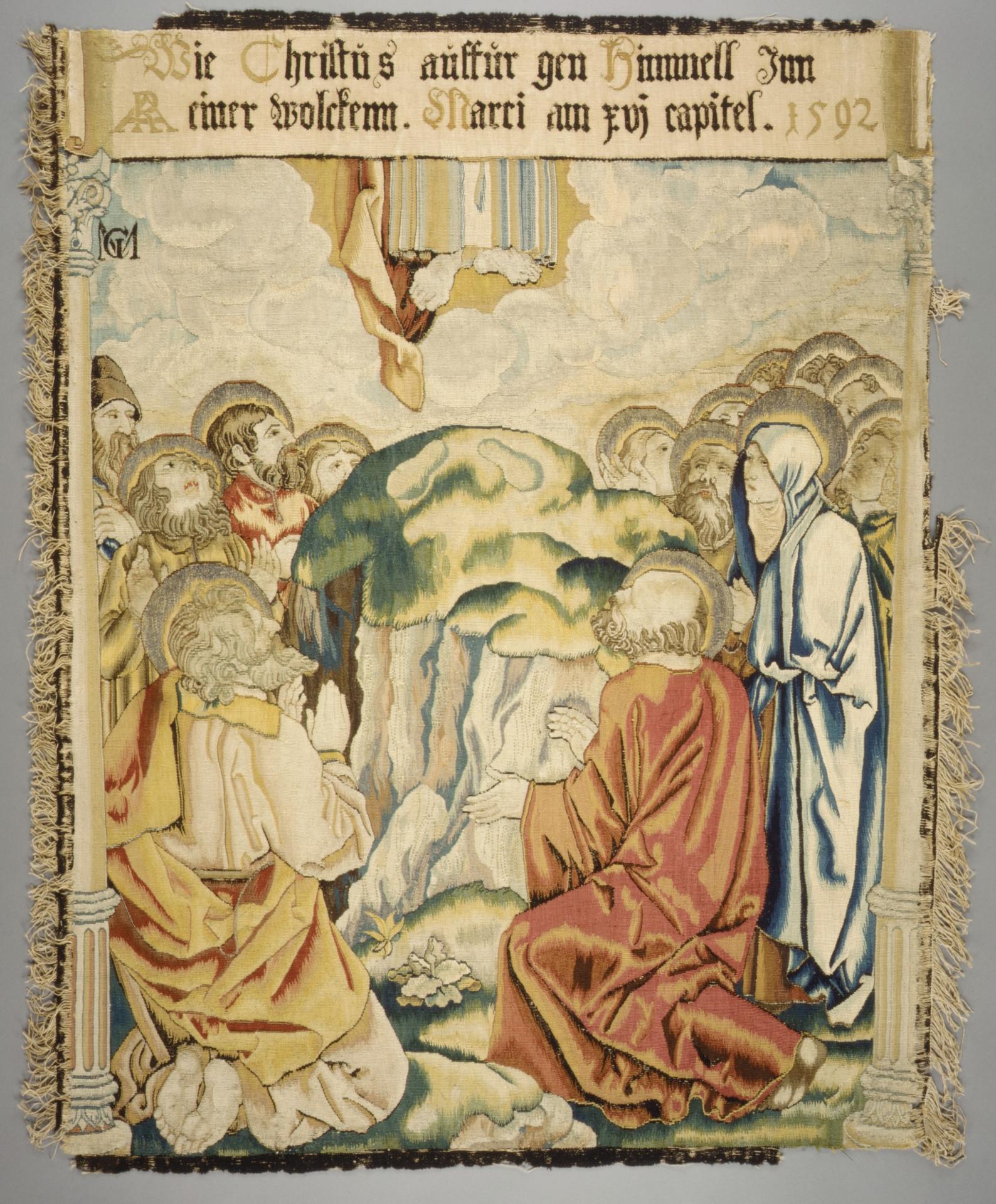
The Ascension from a set of The Passion
Original title: The Ascension from a set of The Passion
kurzbeschreibung
This tapestry, part of a series depicting the Passion of Christ, shows the Ascension. It was woven in 1592 and is attributed to the workshop of Albrecht Dürer, though Dürer himself had died in 1528. The piece is made of wool, silk, and metal thread, with a dense weave of 20 warp threads per inch.
Description
The tapestry depicts Christ rising into a golden, cloud-filled sky, his figure framed by a mandorla of light. Below, the apostles and the Virgin Mary gaze upward, their faces a mix of awe and reverence. The composition is vertical, drawing the eye from the earthly group to the ascending Christ. Rich blues, reds, and golds dominate the palette, with intricate borders showing floral and ornamental motifs.
Context
This tapestry was woven in 1592, over six decades after Dürer's death, likely by weavers who adapted his woodcut designs. The series 'The Passion' was a popular subject for tapestries, reflecting the Counter-Reformation's emphasis on vivid religious imagery. The use of expensive materials like silk and metal thread indicates it was commissioned for a wealthy patron, possibly for a church or noble household.
Impact
The tapestry's dense weave and vibrant colors give it a rich, almost glowing presence. The upward movement of Christ and the attentive poses of the figures create a sense of spiritual elevation. The interplay of light and shadow in the woven forms lends a dramatic, devotional intensity to the scene.
Technique
The tapestry is woven on a loom, using wool, silk, and metal thread to achieve a fine detail level. The 20 warp threads per inch allow for intricate patterning and subtle shading. Metal thread, likely gilded silver, adds a shimmering effect to the heavenly elements, enhancing the divine nature of the subject.
AI-generated description text
Source: Metropolitan Museum of Art · Public domain (CC0)