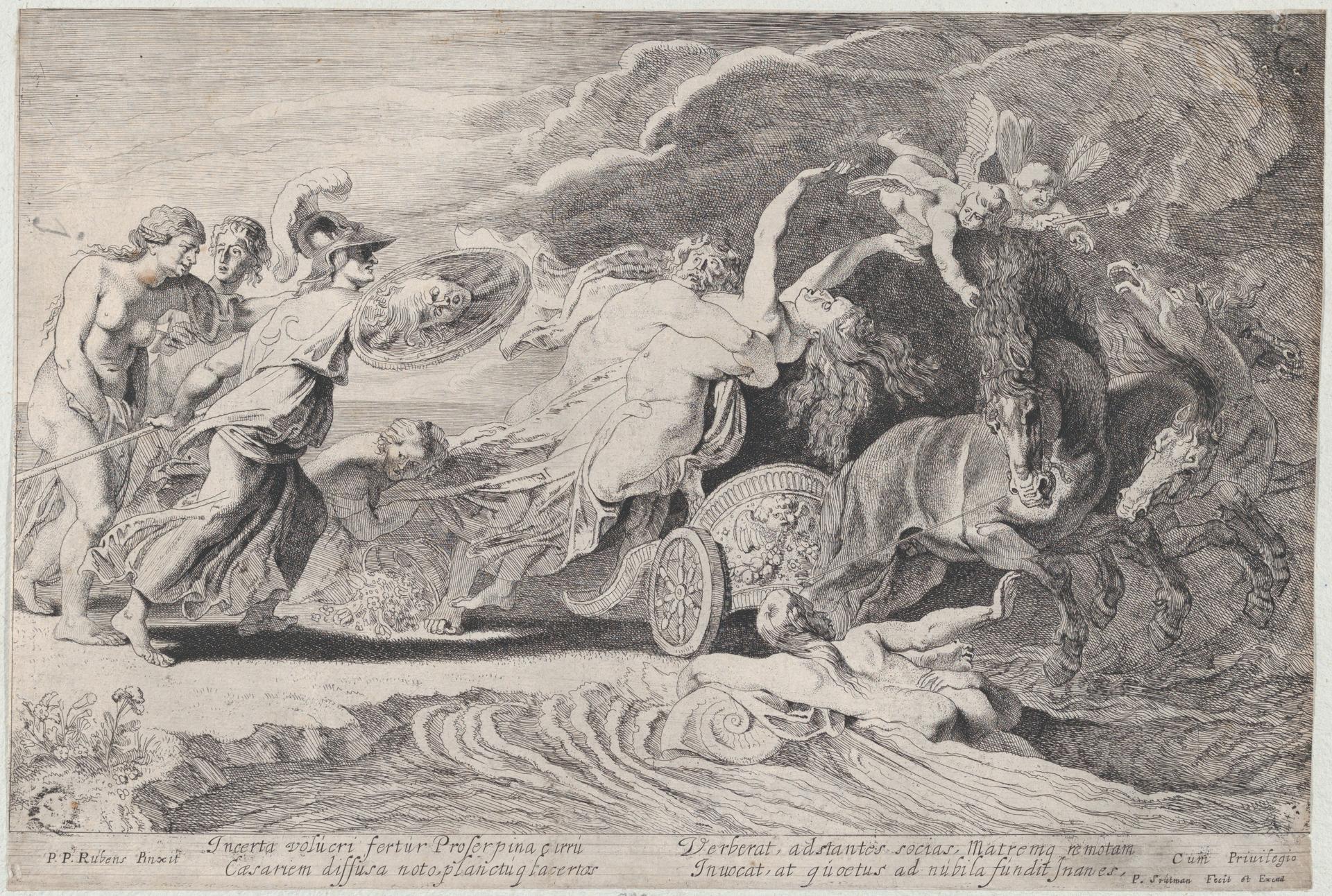
The Abduction of Proserpina
Original title: The Abduction of Proserpina
kurzbeschreibung
Pieter Soutman, a Flemish artist who worked in Antwerp and later in Haarlem, made the etching Der Raub der Proserpina around 1620–25. This sheet, the second of four states according to Hollstein, presents a lively episode from Roman legend: Pluto abducts Proserpina in a chariot drawn by four horses across a flower-filled landscape.
Description
A male driver stands on a vehicle pulled by four horses; a winged angel accompanies him. Nearby, several figures crowd together, including a woman as Proserpina, and other characters with shifting emotions and movements. Clouds and another angel appear in the upper area. The violent motion of animals and people shapes the layout. Below, flowers and plants overgrow the ground. Monochrome etching with delicate lines and gradations defines the work.
Context
In the first half of the 17th century, mythological subjects were very common in Dutch art. Soutman, who at times belonged to Peter Paul Rubens's workshop, likely drew on a painting by the master. The print belongs to a series of engravings published in the 1620s.
Impact
The etching evokes a powerful, dramatic mood and suggests the abduction as a violent act. The dynamic arrangement and differentiated linework create a lively, almost theatrical effect that draws the viewer into the event. Despite being limited to black and white, the print has impact through its richness of detail and expression.
Technique
The etching is an intaglio process in which the drawing is scratched into a metal plate and bitten with acid. The delicate lines and shadings seen in the image analysis result from varying etching times and printing steps. The sheet measures 21.3 × 31.5 cm and is the second of four known states.
AI-generated description text
Source: Metropolitan Museum of Art · Public Domain (CC0 1.0)