Sixteenth-century-style pendant
Original title: Sixteenth-century-style pendant
kurzbeschreibung
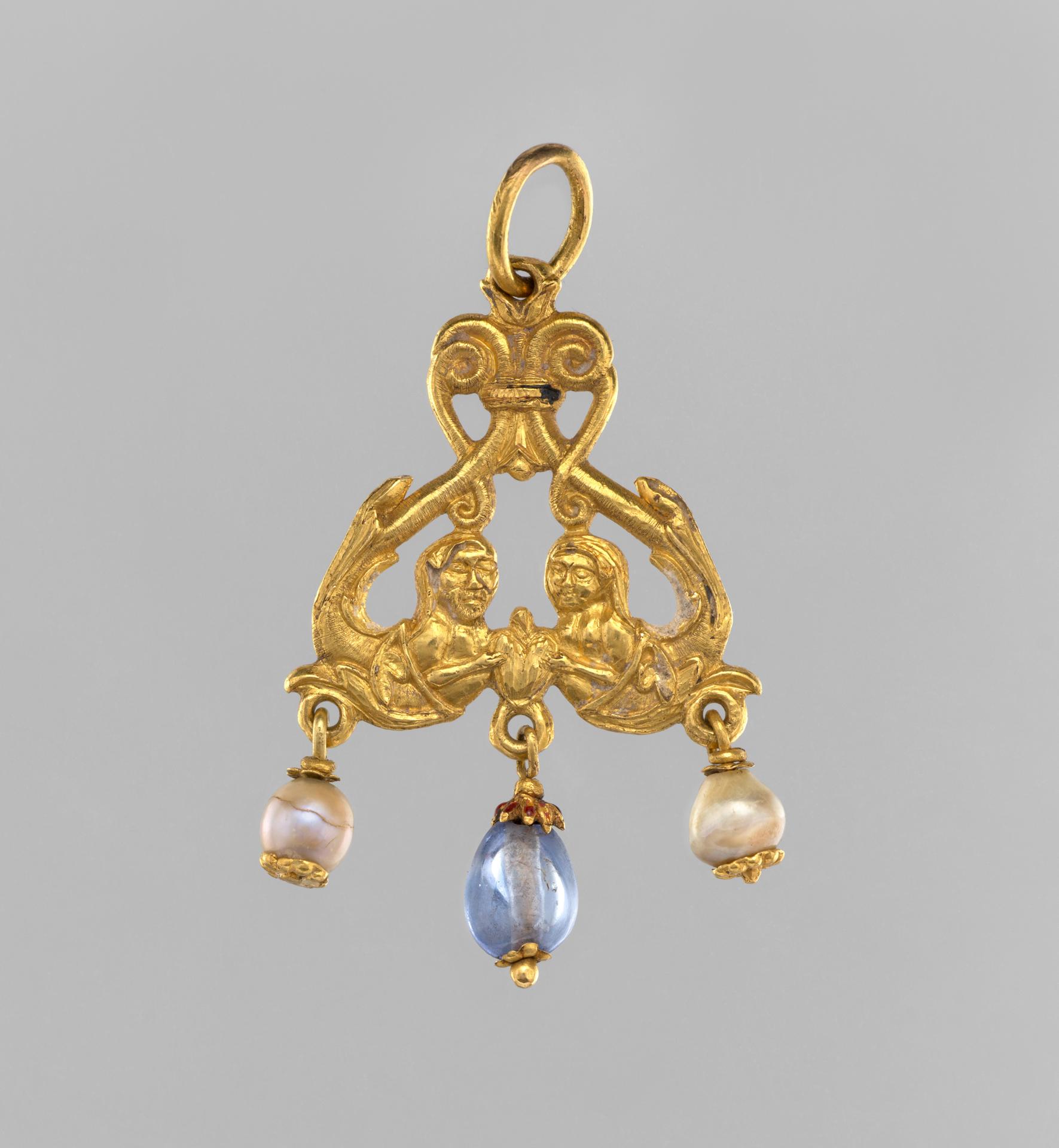
This ornate pendant, attributed to Albrecht Dürer, dates from the 19th century and is crafted in gold, pearls, sapphire, and enamel. The piece features two seated figures holding a central blossom, flanked by dragon-like forms, with three suspended gems below.
Description
The pendant is strictly vertical and nearly symmetrical, with a suspension ring at the top leading into a curved, ornamental canopy. Two human figures sit facing each other, jointly holding a flower-shaped central element, while serpentine, animal-like forms wrap around the upper section. Below, three gems hang: round pearls on the sides and a long blue sapphire in the center, with small red enamel dots visible on the sapphire's setting. The dominant gold gives a warm glow, contrasted by the creamy pearls and vivid blue stone.
Context
Although attributed to Albrecht Dürer, this pendant is a 19th-century creation in the style of 16th-century Renaissance jewelry. Dürer, primarily known as a painter and printmaker, did produce some designs for decorative arts, but this piece likely reflects a later revival of his aesthetic. The use of pearls, sapphire, and enamel was typical of high-status Renaissance adornments, suggesting the pendant was made for a collector or patron of historicist taste.
Impact
The pendant exudes a sense of opulence and historical grandeur, drawing the eye through its symmetrical composition and rich materials. The combination of gold, pearls, and sapphire creates a striking contrast that feels both regal and delicate, evoking the craftsmanship of a bygone era.
Technique
The piece is constructed from gold, likely using casting and chasing techniques to achieve the detailed relief figures and ornamental forms. Pearls are set with wire or prongs, while the sapphire is mounted in a bezel with enamel accents, demonstrating a mix of metalworking and gem-setting skills typical of fine jewelry.
AI-generated description text
Source: Metropolitan Museum of Art · Public domain (CC0)