The Adoration of the Kings
Original title: The Adoration of the Kings
kurzbeschreibung
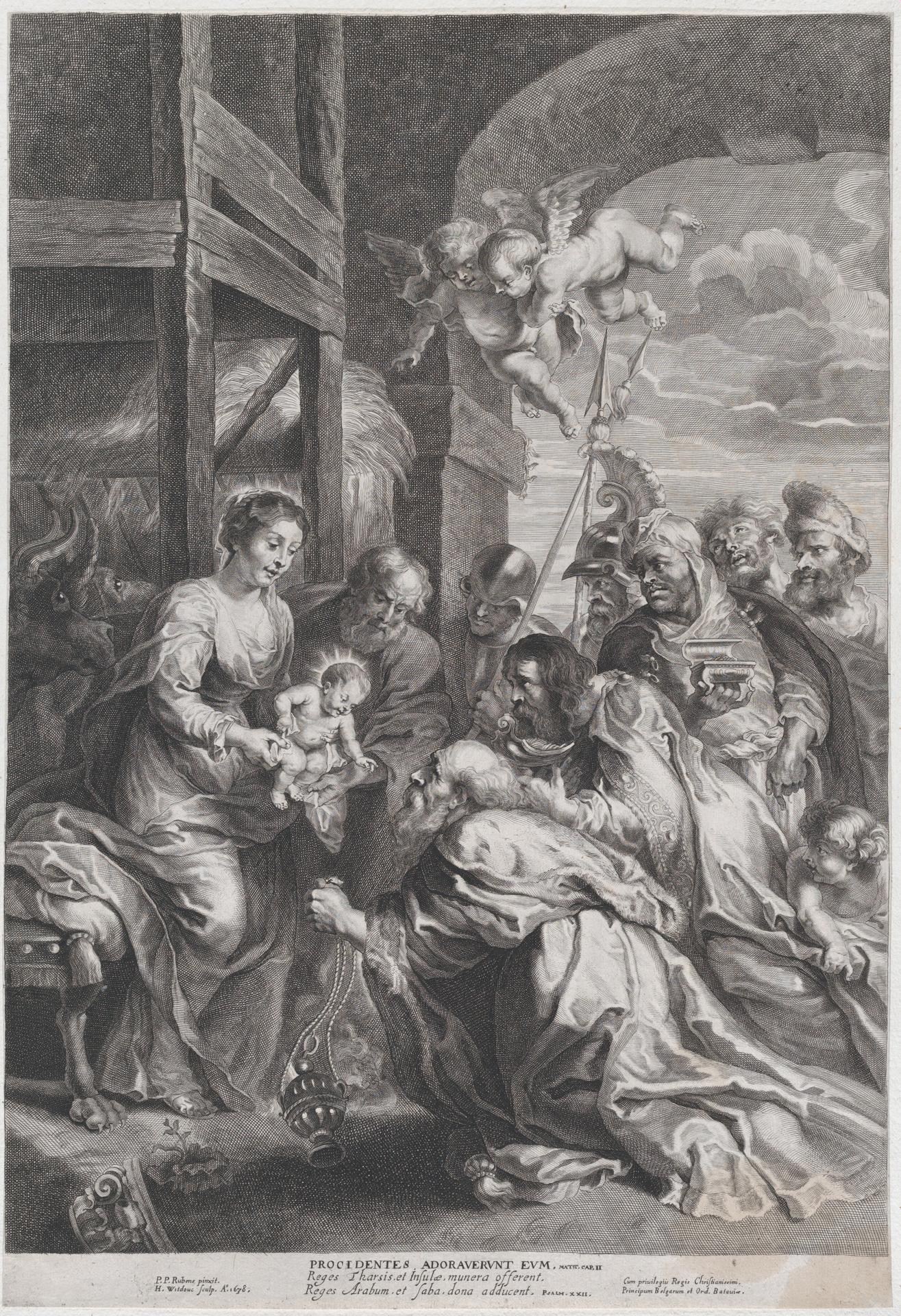
Jan (Hans) Witdoeck produced this engraving, The Adoration of the Magi, in 1638, and the present impression is the third state of three. The subject brings the Holy Family together with the three wise men, who adore the Christ child, placing the print within seventeenth-century Baroque printmaking.
Description
Mary holds the infant Jesus, Joseph stands beside her, and the three kings kneel before the child to present their gifts; their crowned heads stand out. An angel hovers above the group, proclaiming the divine message. The figures are richly worked, with pronounced drapery folds and shadowed passages that give them bodily presence. Diffuse light from above effectively draws the main figures forward, while the print's gray tones create depth and texture.
Context
Witdoeck, a Flemish engraver, worked closely with Peter Paul Rubens, translating his paintings into prints. The Adoration of the Magi of 1638 falls in a period when the Catholic Counter-Reformation shaped religious art in Flanders. The sheet probably derives from a composition by Rubens, which Witdoeck executed as an elaborate reproductive engraving. The third state represents the final version after revisions, as was customary for collector editions.
Impact
The dynamic layout and strong perspective pull the viewer directly into the event, making the kings' devotion intimately tangible. Contrasting lighting and carefully modeled figures give the sheet a solemn, almost theatrical impact characteristic of the Baroque.
Technique
The print was made by intaglio: lines were engraved into a metal plate and then transferred in ink to paper. Parallel and cross-hatched strokes produce the fine gradations of gray and the illusionistic depth. The third state attests to the plate after several stages of work, and thus to careful revision.
AI-generated description text
Source: Metropolitan Museum of Art · Public Domain (CC0 1.0)