Drunkeness of Bacchus
Original title: Drunkeness of Bacchus
kurzbeschreibung
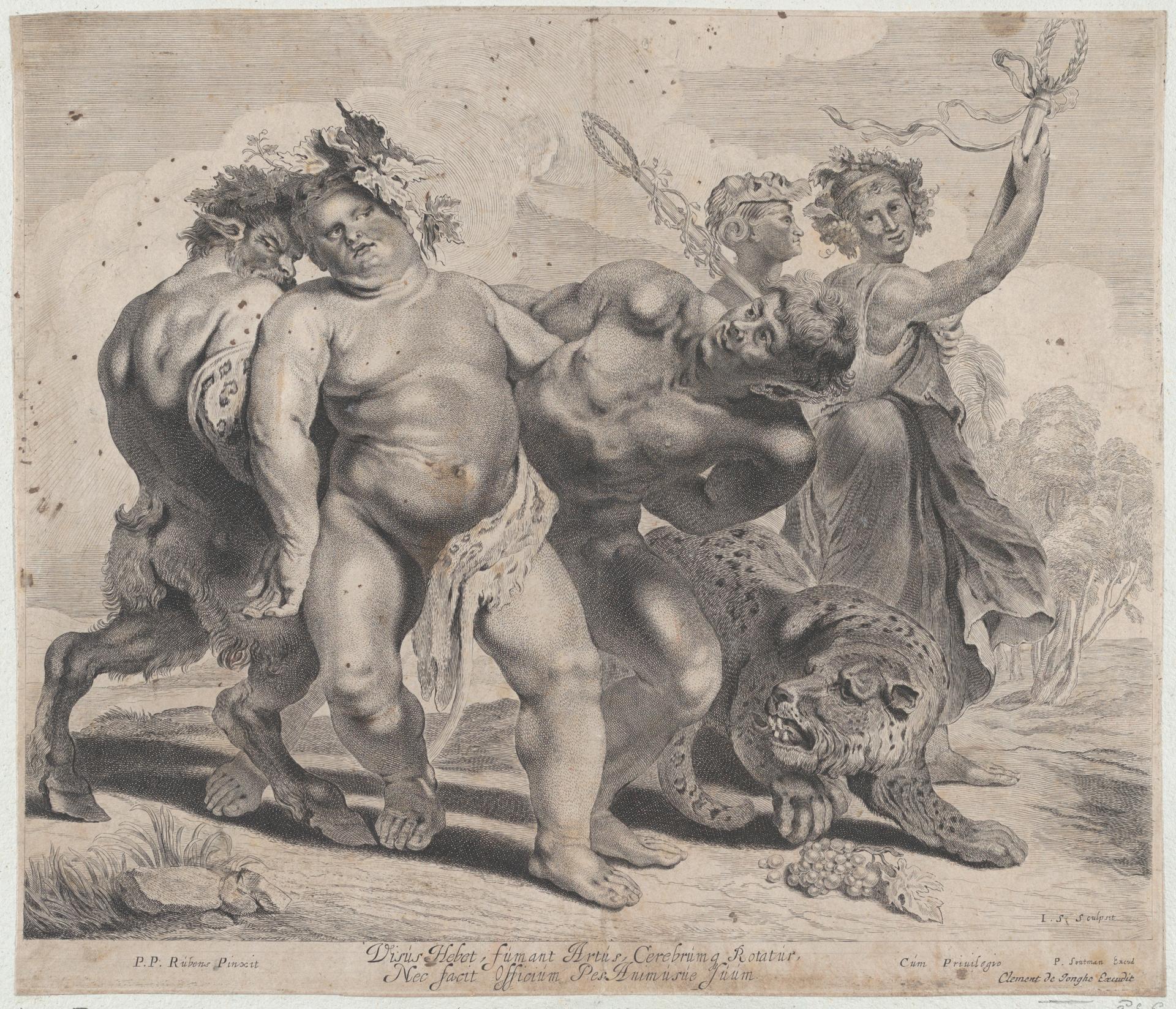
Between 1630 and 1677, Jonas Suyderhoef produced the engraving and etching "Drunkenness of Bacchus," presenting a dramatic group of figures in a landscape. This impression is the second of four states.
Description
A massively obese body dominates the center, held or carried by two powerful men. To the right appears a crowned woman with a raised weapon, while behind her a figure in animal skins comes into view. Grapes, foliage, and a leopard-like animal lie on the ground; clouds gather in the sky. Latin inscriptions line the lower edge.
Context
Suyderhoef, a seventeenth-century Dutch engraver, was known for reproductive prints after paintings. His active years in Leiden fall between 1630 and 1677, the period from which this sheet is dated. The drunken Bacchus was a common motif in the Baroque, often interpreted as a symbol of transience or the power of wine.
Impact
The bulky body at the center creates a monumental yet unsettling tension that the muscular figures around it absorb. Erotic femininity, animal presence, and classical imagery coalesce into a mythical atmosphere. The inscriptions and turbulent clouds heighten the impression of an allegorical spectacle.
Technique
Engraving and etching were combined, producing fine lines and deep shadows. Several reworkings of the plate exist; the impression shown corresponds to the second state. At 29.8 × 34.9 cm, it is a medium-sized, richly detailed print.
AI-generated description text
Source: Metropolitan Museum of Art · Public Domain (CC0 1.0)