Vita Beati P. Ignatii Loiolae
Original title: Vita Beati P. Ignatii Loiolae
kurzbeschreibung
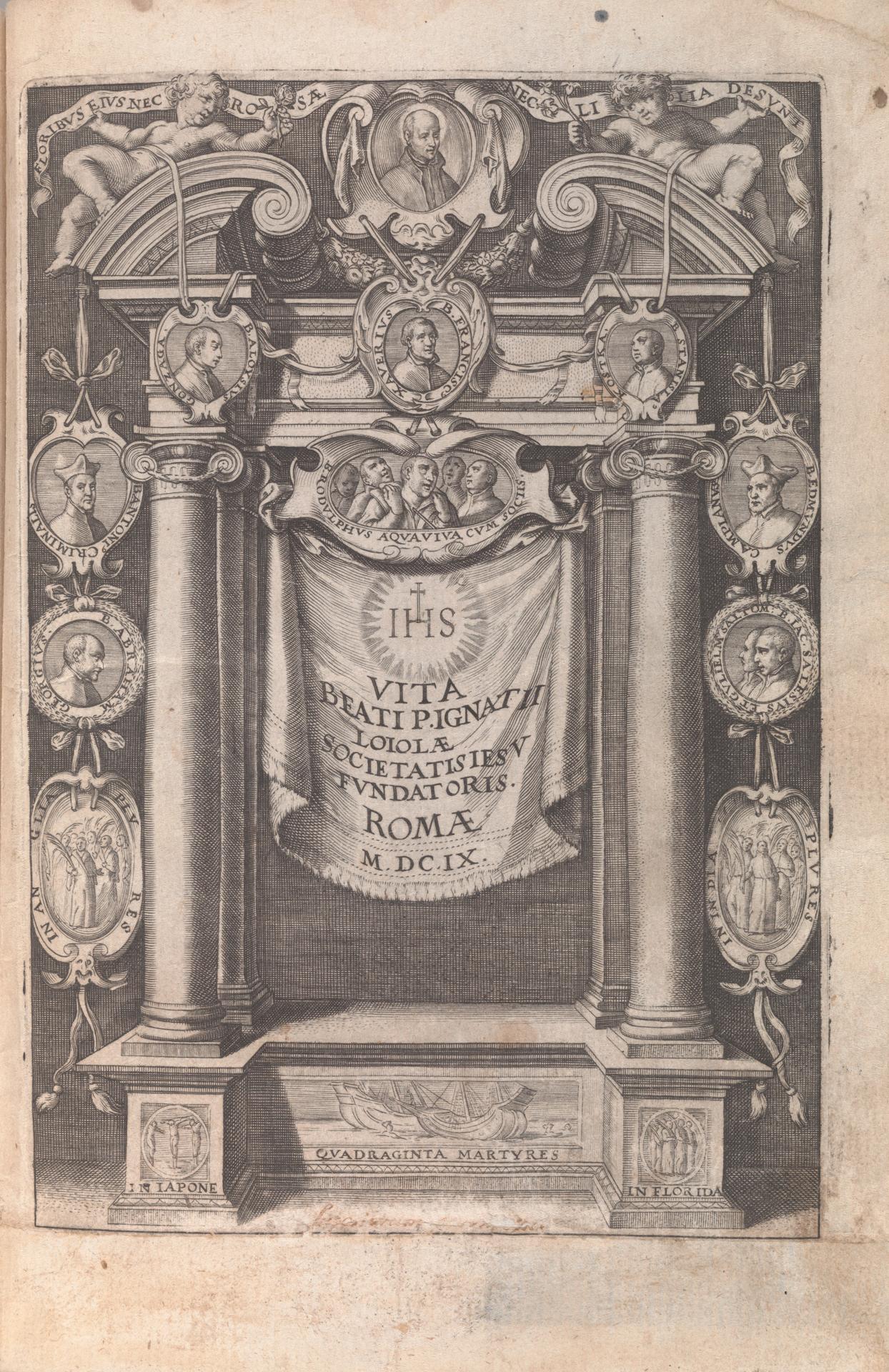
Unlike typical saintly lives, the title page for the 1609 Vita Beati P. Ignatii Loiolae does not present a scene from Ignatius's life; instead, it offers an architecturally framed monument of honor. The print, whose technique is not recorded, measures 6 x 8 inches (15.2 x 20.3 cm) and places the founder of the Society of Jesus at the center of a symmetrical arrangement. A banner inscribed with IHS and the Latin title anchors the sheet.
Description
A frontal structure in strict mirroring calls to mind a tomb or memorial. Hanging in the middle is a large banner bearing IHS at the top and below it the words VITA BEATI P. IGNATII LOIOLA SOCIETATIS IESV FUNDATORIS ROMA M. DC. IX. Columns flank the banner, adorned with coats of arms and portraits. Above the banner appears a relief showing several figures in conversation, while at the upper edge two angels each hold an image.
Context
Made eleven years after the death of Ignatius of Loyola (1556) and three years before his beatification in 1622, the sheet points to a veneration that preceded official canonization. In 1540 Ignatius had founded the Societas Jesu, an order known for education and mission. The form of the monument with saintly attributes suggests the print served as a title page for a publication or as a devotional image.
Impact
The mirror-like arrangement and the solemn framing by columns and angels give the sheet a dignified, sacred aura. Monochrome printing and clear contours emphasize its graphic character and evoke the memory of festive Baroque prints. The layout feels more representative than narrative.
Technique
The technique is considered unknown; visual analysis nonetheless suggests an engraving or etching. The monochrome appearance and precise linework are typical of these printmaking methods. The careful execution of coats of arms and portraits indicates high craftsmanship.
AI-generated description text
Source: Metropolitan Museum of Art · Public Domain (CC0 1.0)